
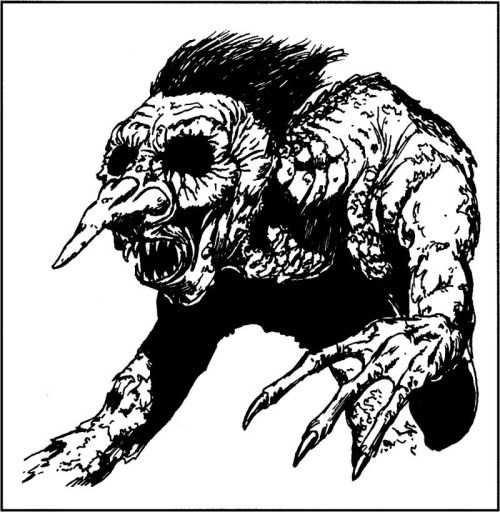
In my previous column here, I suggested that cavalry may be the best unit type to use against trolls in AD&D. Not just because the damage advantage of the lance at the charge, but because the charging horse might overbear a troll, knock it off its feet and forestall the trolls attacks. But am I right? Let’s take a look.
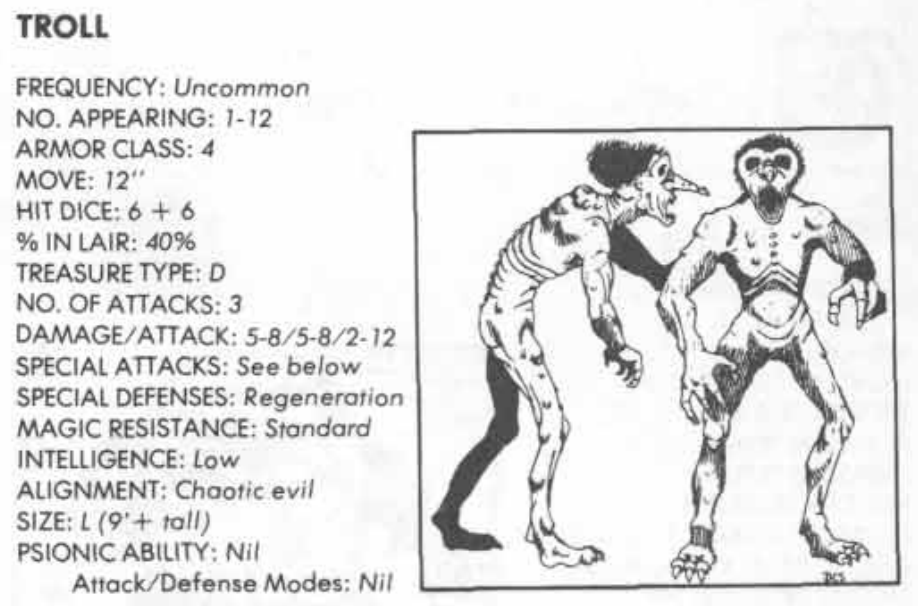

The Monster Manual lists trolls as large. Nine feet tall or taller. How much taller? Not a lot I think. The Monster Manual shows Hill Giants at 10.5 feet tall. I’d limit trolls to 9-10 feet tall.
And horses? Well, the Monster Manual doesn’t say. But like trolls, lists horses as large too. I have to turn to other sources. This site seems to have some useful information. And, this one too. In the table below I compiled estimates of heights and weights for the variety of horses in the Monster Manual and similarly for maximum and minimum trolls. The horses lean toward the large end of their categories but it’s a fantasy game and I needed to simplify things.
Determining strength and dexterity was more difficult. All the Monster Manual says is that trolls are known for their strength. But so are the smaller Ogre and the bigger Hill Giant. And, it’s well known that Ogres are of 18/00 strength and Hill Giants 19 strength. Not a lot of room to move to place the trolls in between — I decided trolls are also 18/00. For dexterity I gave the trolls an 18 based on their nimble ability to strike at multiple targets per round. Your mileage may vary but I had to choose something.
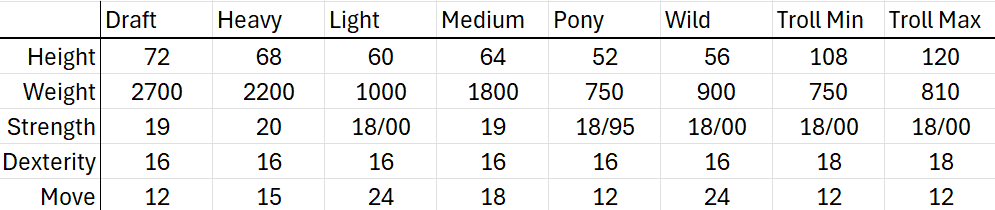
For horses, I based the strengths on the horse type carrying capacity listed in the Monster Manual. For dexterity I based it on the horse AC of 7 (-1 AC for hide and the other -2 for dexterity). Again, one’s mileage may vary but at least it’s a basis.
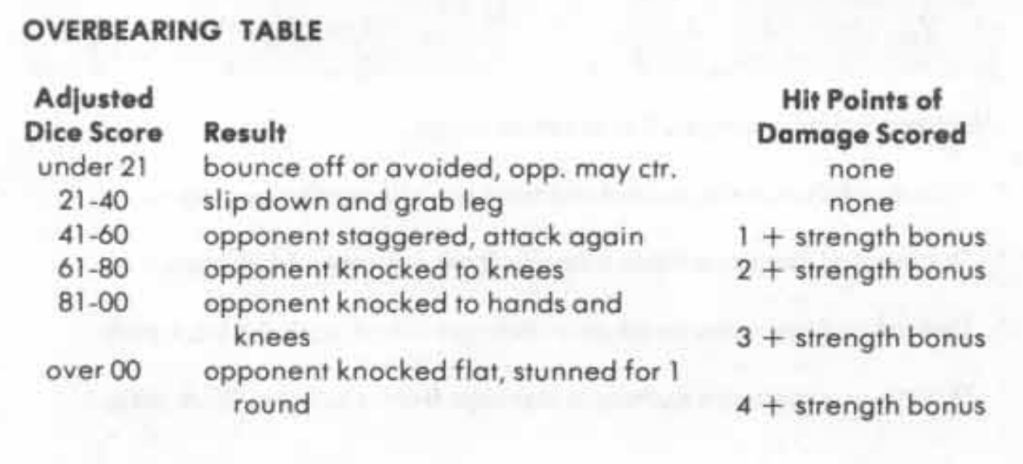
Those parameters are used as inputs into the non-weapon combat grappling and overbearing rules. I won’t go into the details of how, but you can look them up on pages 72 and 73 of the DMG. The basic deal is that overbearing uses the same “to-hit” percentage as grappling does, but it uses parameters as modifiers to a different effect table. The long and the short is that after rolling against your grapple percentage, if you grapple you then roll percentile on the Overbearing table and modify that roll based on your parameters. I calculated the overbearing effect modifiers for each horse type against the minimum and maximum troll.
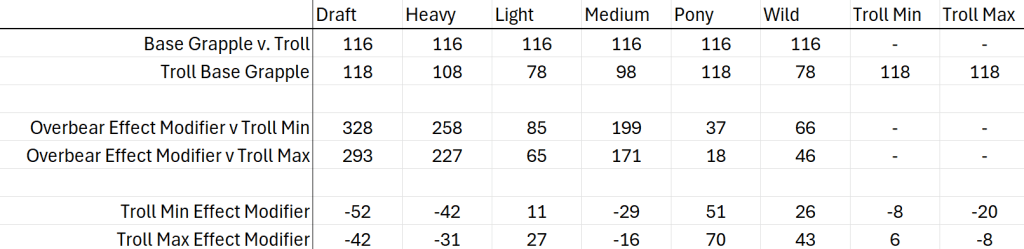
One can see from the table is that both horses and trolls have decent ability to grapple one another. Trolls suffer a little bit with the faster horses but still have a decent chance with them.
For effect though, most horses have a distinct advantage over trolls when overbearing. Most of the this is down to weight. Except for the smallest of horses, most horses weigh significantly more than a troll and it really shows in the effect modifier. And these calculations do not include any effect for charging. Trolls on the other hand, suffer when trying to overbear a horse for the same reasons, the trolls height advantage does not make up for their weight disadvantage. A troll might do okay against a pony and lighter horses. But medium sized horses and large aren’t likely to be knocked flat by a troll.
Horses, on the other hand, nearly always both knock a troll flat and stun them. And, stunning is what you want. Don’t give a troll a chance to get those attacks in. Run them down, lance them, and keep running them down until you are ready to throw the pieces into the bonfire.
In practice what this analysis shows is that if you are running medium or larger horses against trolls and no magical effects are involved, roll percentile twice. Unless either of these rolls are near a hundred don’t even bother with calculating the detailed percentages, just assume the troll has been knocked flat and stunned. For trolls trying to overbear a horse, one should dig into the details — the size of horse matters. Maybe halfling cavalry riding ponies isn’t the best against trolls — but it still will likely do better than the halfling infantry.

And, there is another thing to note. For cavalry against even smaller opponents, like other medium sized infantry. Well, let’s just go with, they get run over.


 Fluid -- Druid
Leave a reply to Unarmed Combat in AD&D: horses, dragons and overbearing – Fluid — Druid Cancel reply