
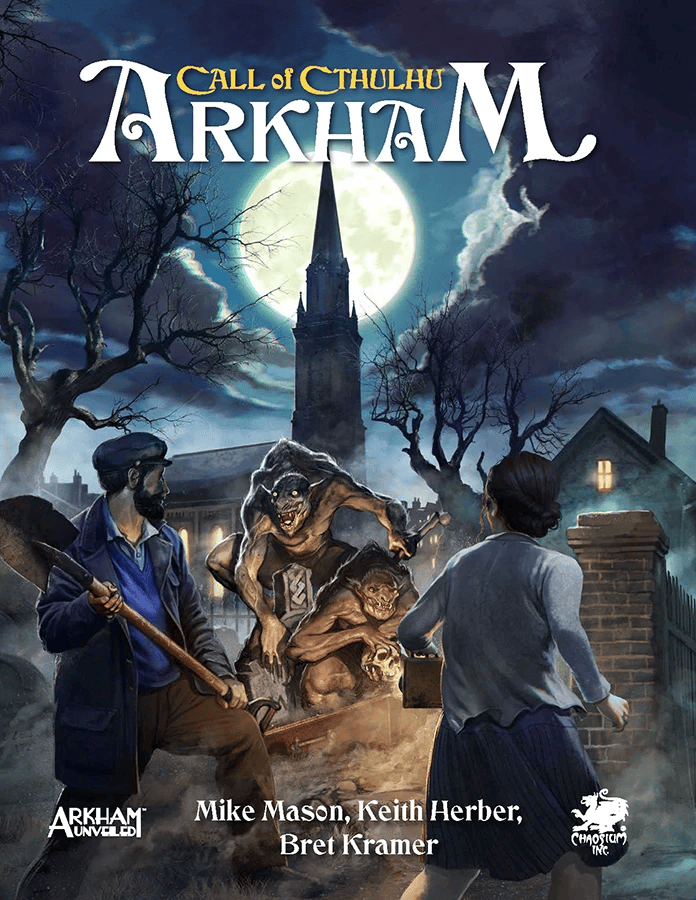
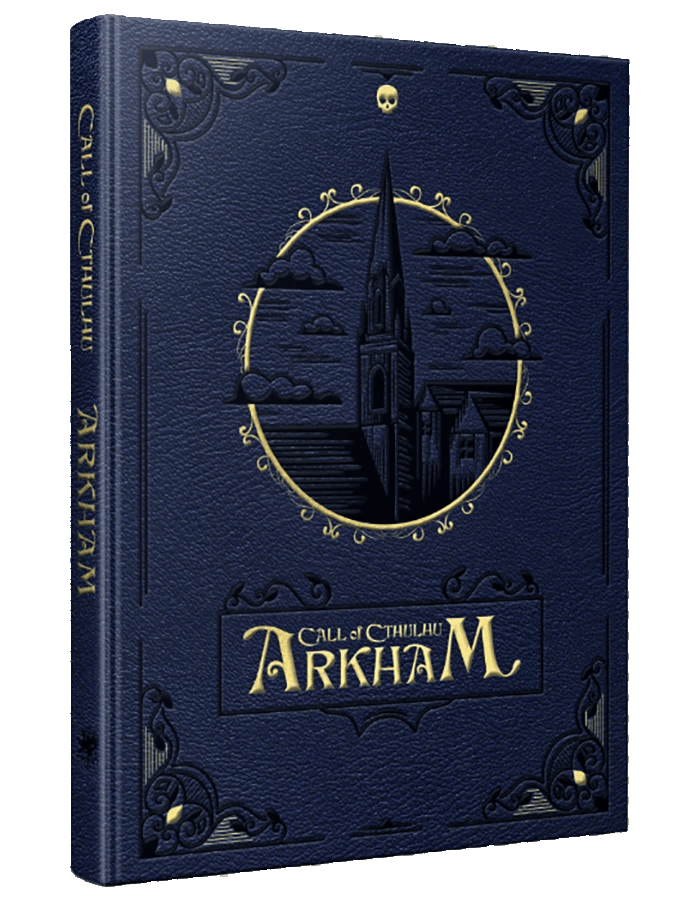
I don’t do many product reviews here. Mostly because I discourage using most RPG products other than the games themselves. However, I make an exception here. First because the original edition Arkham Unveiled, from 1995, was the start of one of the finest lines of RPG splatbooks ever produced and it’s worth it to take a look at a new revised edition. Sadly, its author Keith Herber is no longer with us. But, kudos to Mr. Herber on doing a fine job on the original.
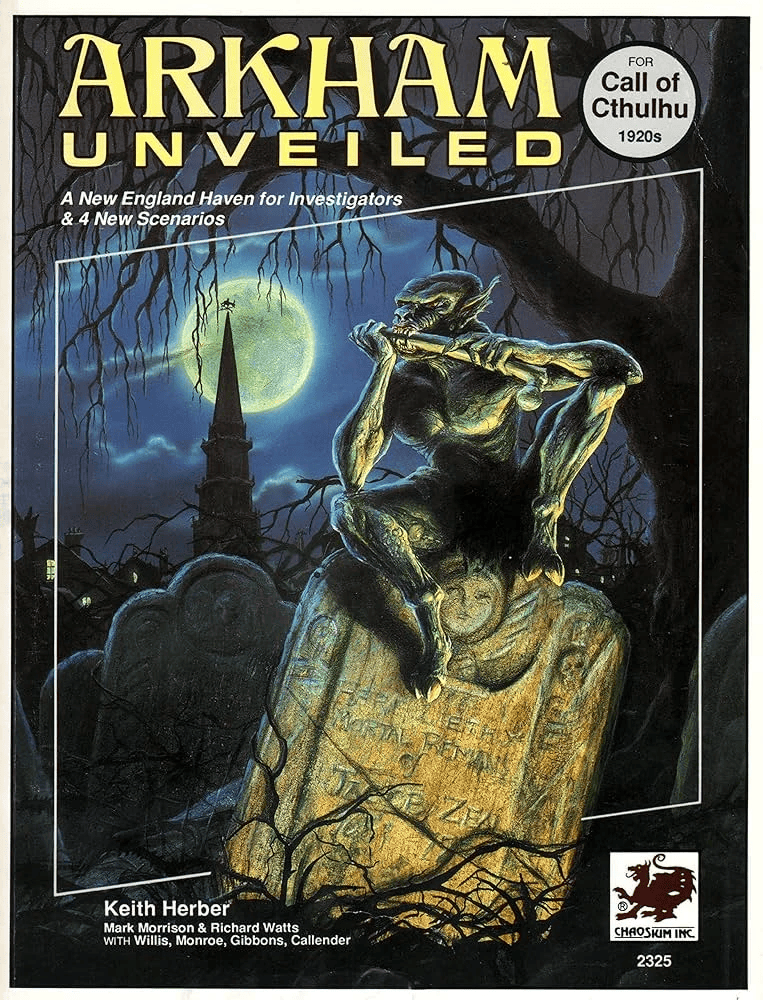
The second reason is that, since 1995, my opinions on what makes a good RPG, and a good RPG setting book, have evolved since 1995. I discussed this a little bit here.
Disclaimer, what I review here is the leatherette covered version. I chose that version for two reasons. The first being, I hate the cover painting on the new version. Not that it’s bad, really. It’s just that it has a modern tone of dull brownness that you often see in modern RPG art (more on that later). And, really, I much prefer the original cover art by Lee Gibbons. Sure, the original cover is less dynamic and features no human PCs to identify with, but it that really a problem? No, Lovecraft’s ghouls were always a little more contemplative than say, the D&D ghoul. Though, it’s worth arguing that the D&D ghoul’s paralyzation effects is due to tickling and therefore D&D ghouls are Lovecraftian in conception. But that’s a digression. The second reason is that the Leathette verion nicely complements my 20th year anniversary edition of the Call of Cthulhu rules. I mean, just look at them together.
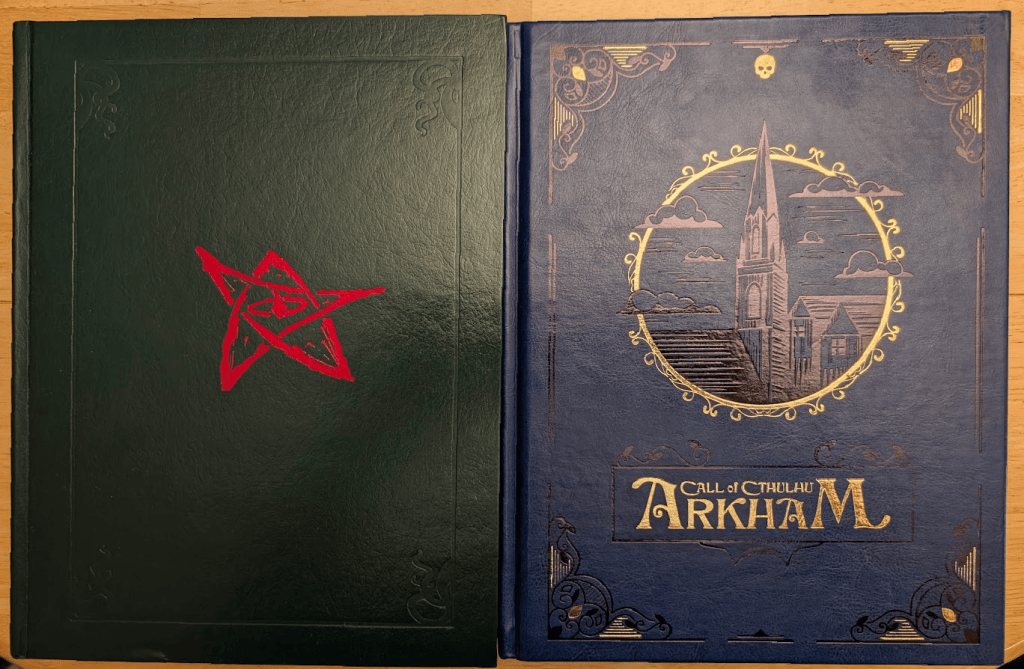
Since Call of Cthulhu is a horror game, let’s first off start with the negatives. While, I just favorably compared it to my 20th year anniversary rules edition, that book, circa 2001, included some design elements I disliked. In fact, if not the actual start, it started the trend for me of RPG books using graphic elements as background to rules text. I’ve always disliked this as it makes the page busy and harder to read. Plus, distracts from rules on the page as a tool to use with the game. Black text on white paper is my preference. Five hundred years of printing books can’t be far wrong.
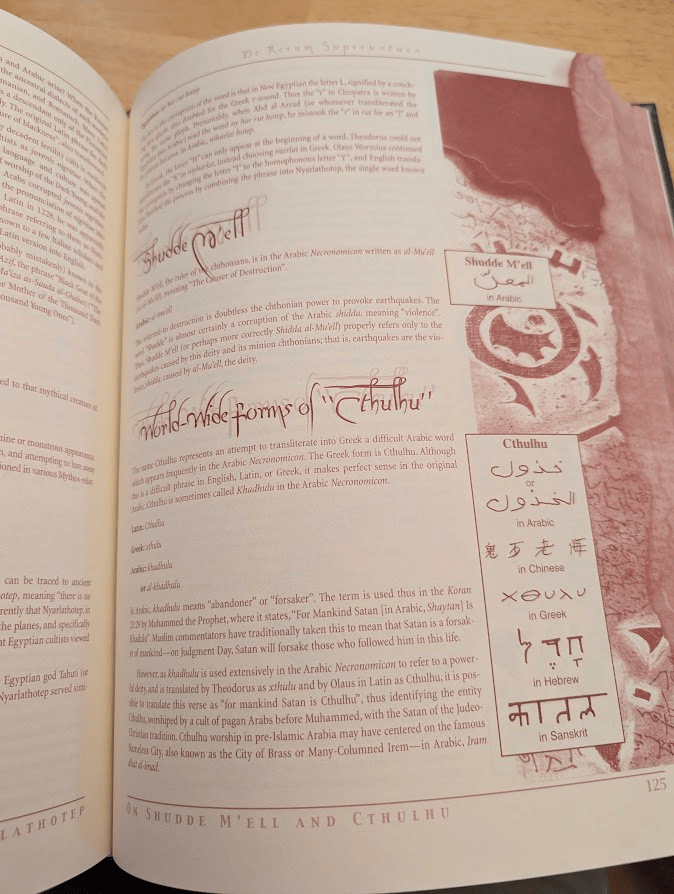
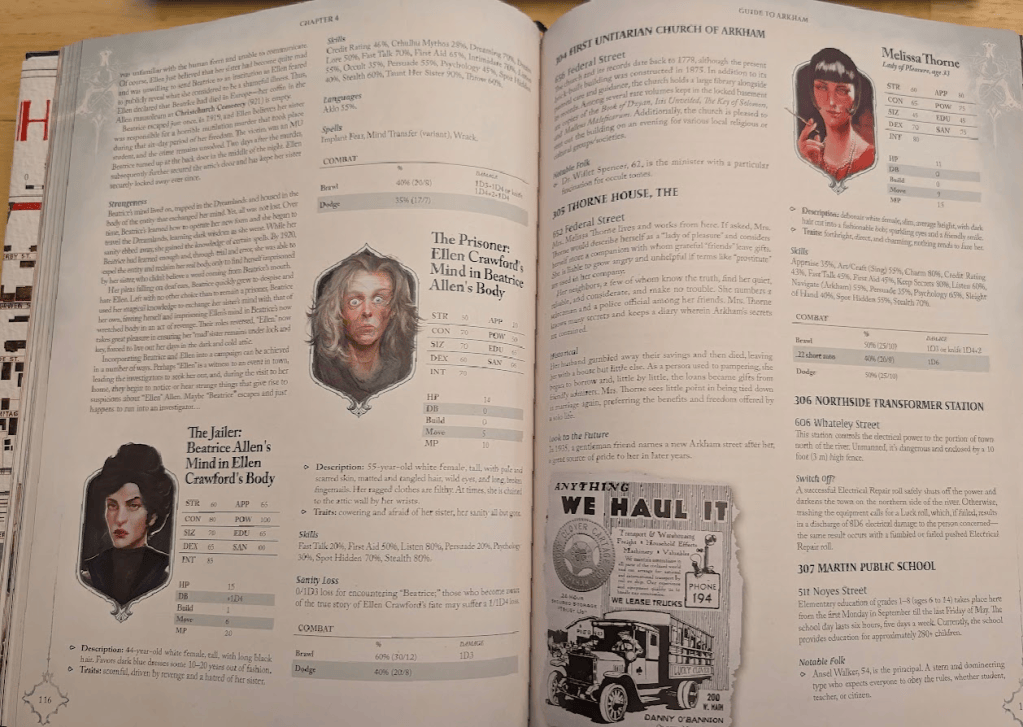
That said, the Call of Cthulhu Arkham approach is better than most these days. The graphic elements mostly don’t detract from the reading experience too much. Kudos to them is trying to make it legible at least. Yet, they did continue the practice of printing on glossy paper. This is because of the amount of full color they include on each page. The problem is that full color looks better on the smoother surface of glossy paper, and glossy means, well, glossy.
Reading on such paper has more reflections and thus more eyestrain. Plus, when a whole book is composed of glossy paper it weighs more resulting in a less easily handled book for quick reference. You see, what makes glossy paper glossy is that the cellulose matrix of the paper fibers is filled in with a finer precipitate of calcium carbonate (i.e. limestone) rather than ground calcium carbonate. Glossy paper is made with a greater proportion of stone. So, heavier. Ugh. It turns out that when you make your books out of stone, they handle with the properties of a stone. It takes a druid to understand these things.
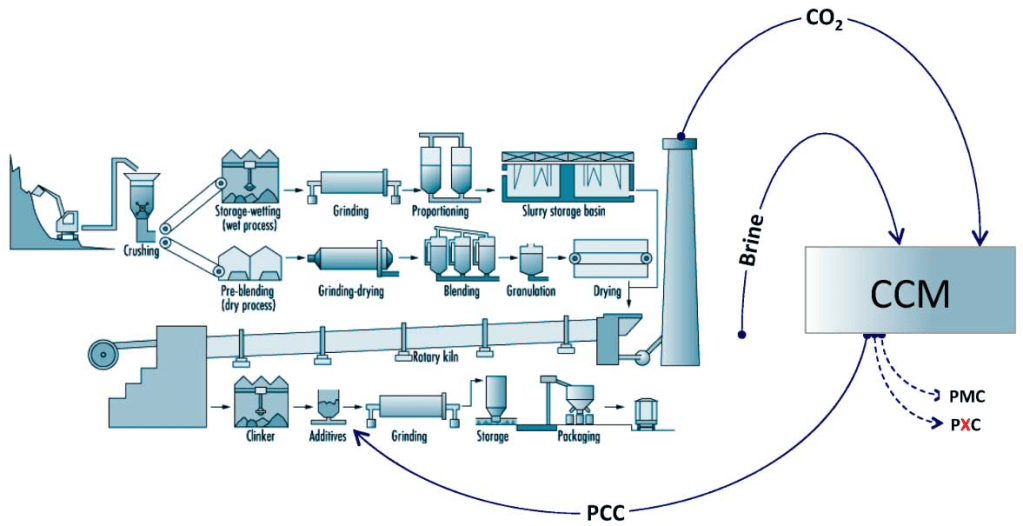
Still, the making of precipitated calcium carbonate is a cool industrial process where limestone (CaCO3) is cooked in giant rotary kilns to produce lime (CaO) and Carbon Dioxide (CO2) and then the lime and carbon dioxide reacted back into limestone — except a much finer variety with different crystalline properties. But, I digress.
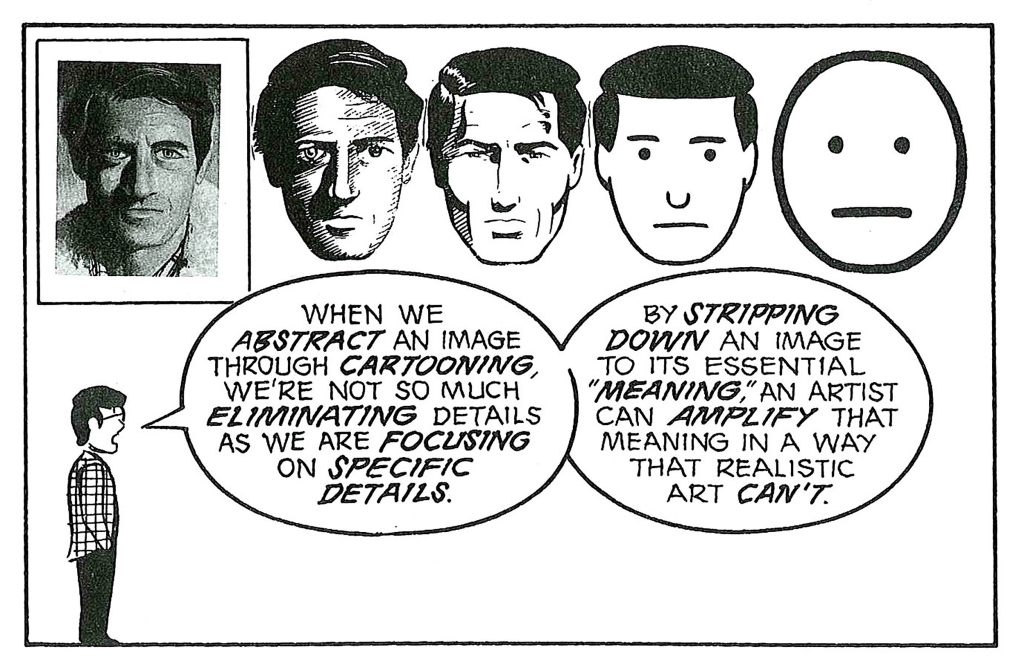
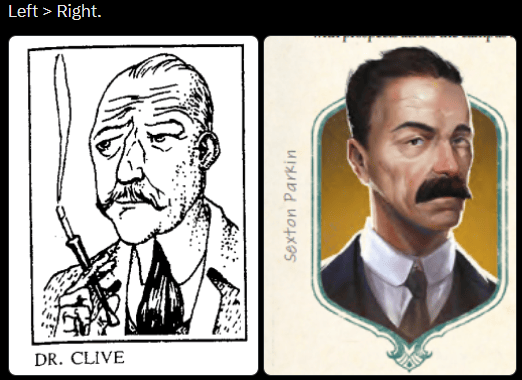
Next, the illustrations. They are fine. Most are well done, tasteful, and serve the purpose. That said for the various NPC portraits I think the full color draws the viewer out of the character than than into the character. And, for an RPG where either a player or referee is supposed to be identifying with the character, full color takes away from that. In his book Understanding Comics, Scott McCloud explains why this is. So, again, the old standard of simpler black and white pen and ink works better for RPGs in my opinion.
There is one illustration within that I really hate. This one.
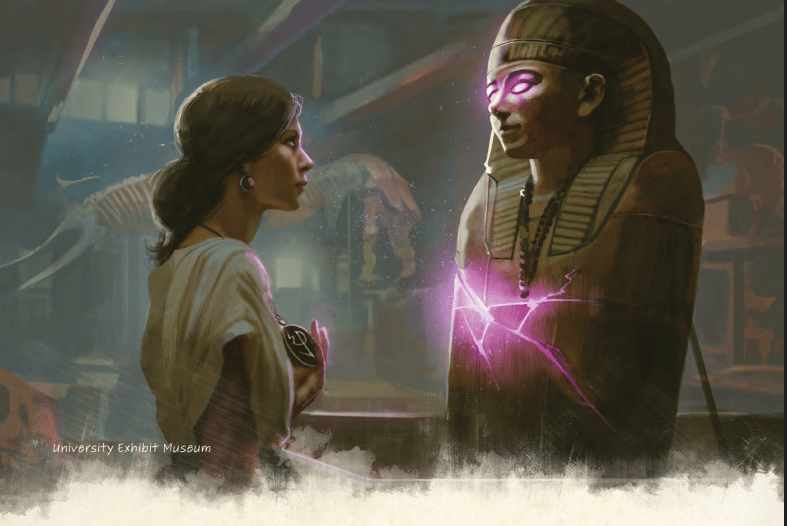
Maybe it’s just exposure to Wizards of the Coasts apparent house style, but that color of pink glow sends me over the edge. That plus the relative low gradation in contrast. Can we have some deep shadows, please? Just making it grayscale is an improvement.
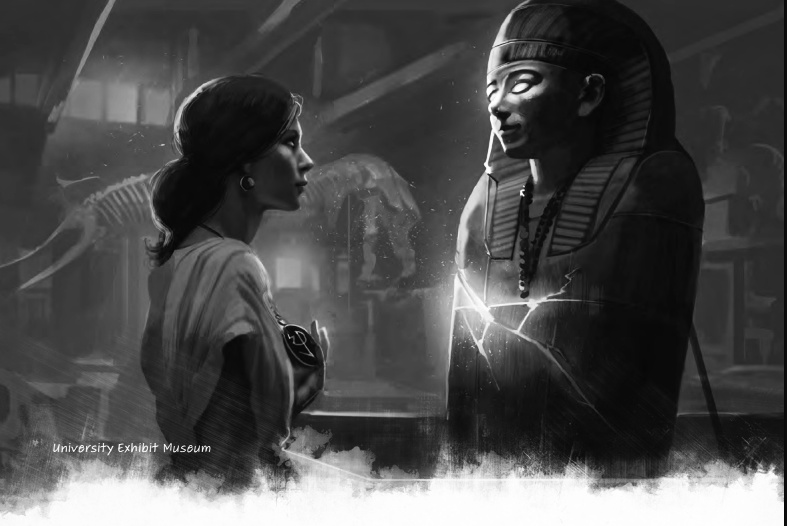
And, then there is this.
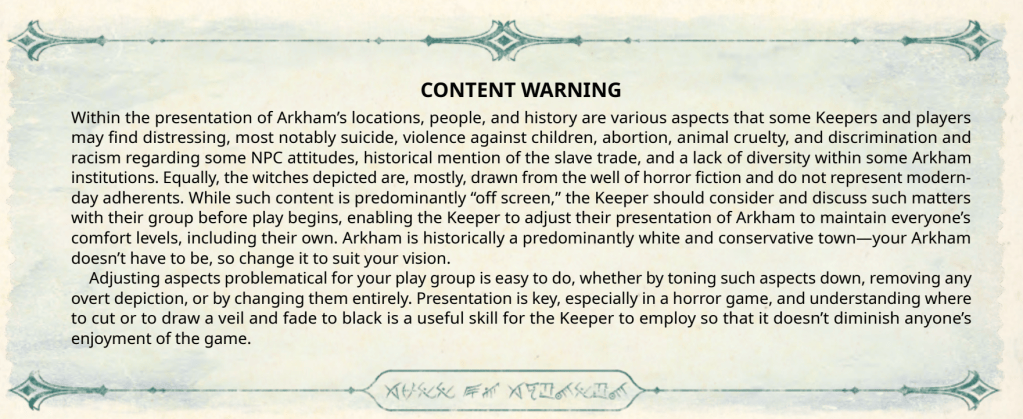
You are presenting and selling a horror game. Have the courage of your convictions. Swim in the deep end or get out of the water.
Okay, that’s the main complaints. Let’s talk about the goodness. With the appendices, the book runs to 266 pages. In comparison, the original Arkham Unveiled was 160 pages. And, a good chunk of those pages were made up of four scenarios. Those scenarios were left out of this edition. That was the right call. I was never a fan of the scenarios presented, and I have come to believe, scenarios, as has long been the practice for the Call of Cthulhu RPG, are a real misstep in playing it as a game.
I have not done a close read yet, so this isn’t a real comparison to the original in terms of divining what is new content or not. But, those 100+ new pages do appear to be more than just larger fonts. For one, there does appear to be more named places marked on the map, each of which has one or more detailed NPCs associated with it. That’s good and bad. There is more to keep track of but, overall I like it.
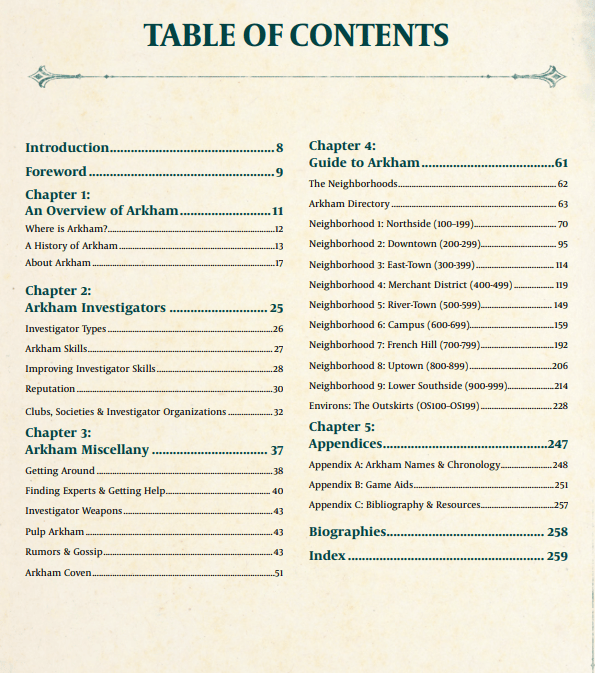
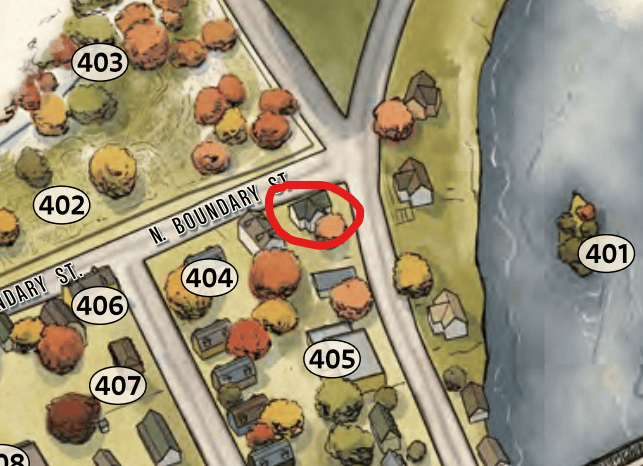
I like the organization. The opening chapters explain some history and useful information about operating in the town in general. Then the meat starts in Chapter 4 which details the nine neighborhoods in town, the personnages associated with those locations, plus information about the outskirts. Plus, in addition to the provided maps, the book has many nicely presented neighborhood maps. Here, for example I’ve circled the location of the rented house my mid-90s players used as their base of operations. Right next to the graveyard. Perfect.
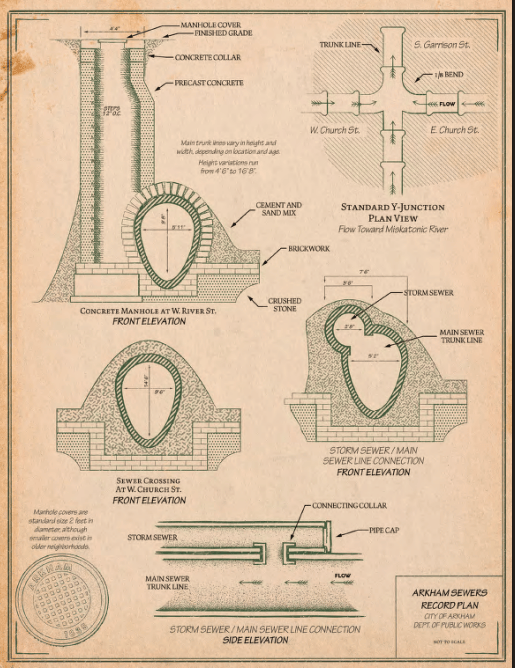
Another nice addition (I think) is there is more detail given on the sewers and tunnels under the city. Along with a nice diagram of their construction should player characters ever need to repair a sewer line. I say this in jest but, really, not every character need be a dilettante scholar. In Arkham, it could be interesting playing out the daily life of a sewer worker. Perhaps more interesting than one might expect.
Mostly, the book is as expected. Each neighborhood is a long list of places marked on the map, the people, items, and creatures associated with them — some in more detail than others. This isn’t a bad thing. It’s quite well done for what it is. But, don’t really look for any innovation here.
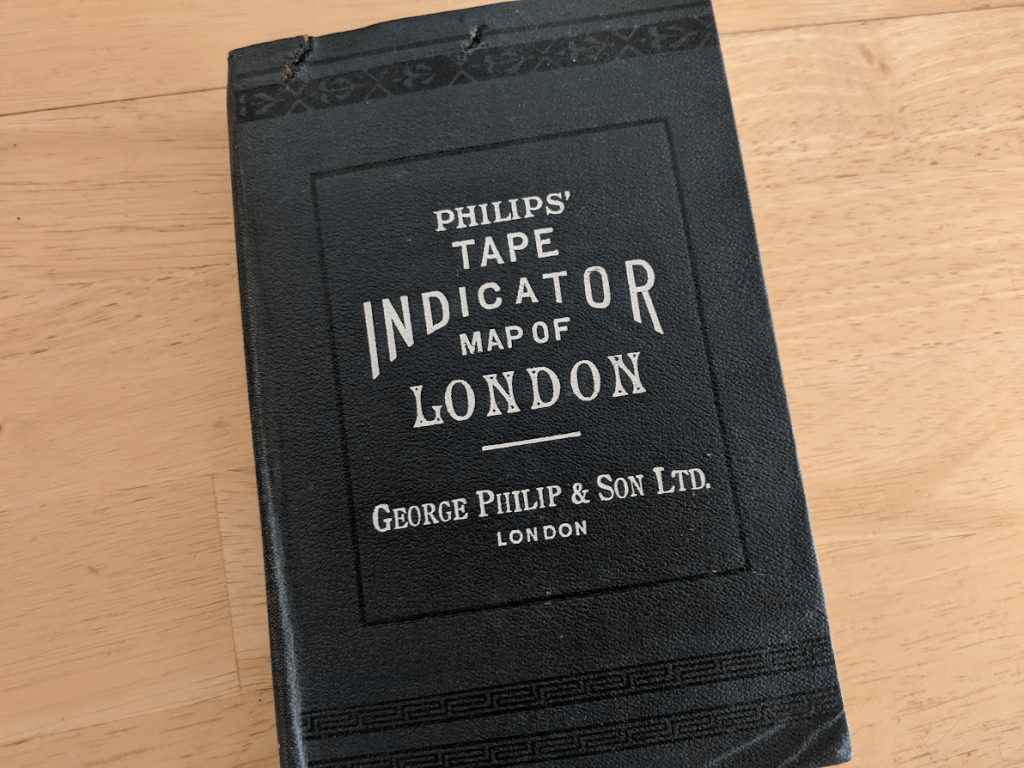
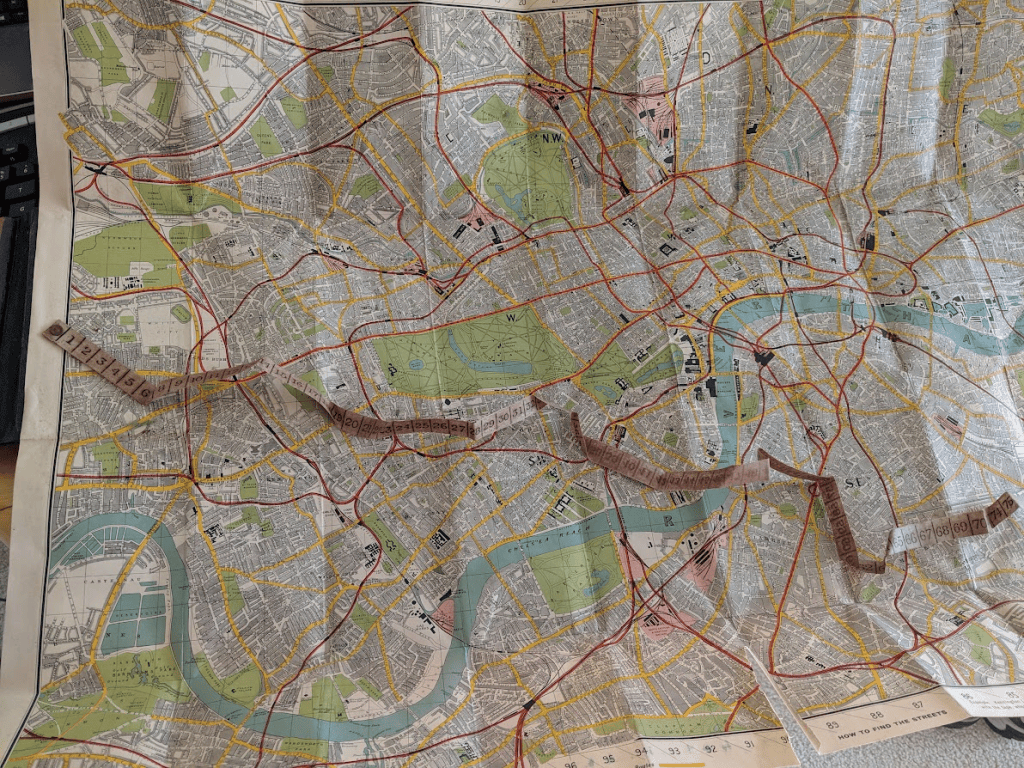
The maps I really like and are well presented. The color on the maps is nice but also not in period for city maps at least. Sure, a London map might get the color treatment. But a minor city in a small state? It would be cool to get a tape map book version of Arkham. I suppose I yearn for more.
Still, the maps are quite good. For the players, a street map with notable locations. And, an environs map showing the surrounding coutryside.
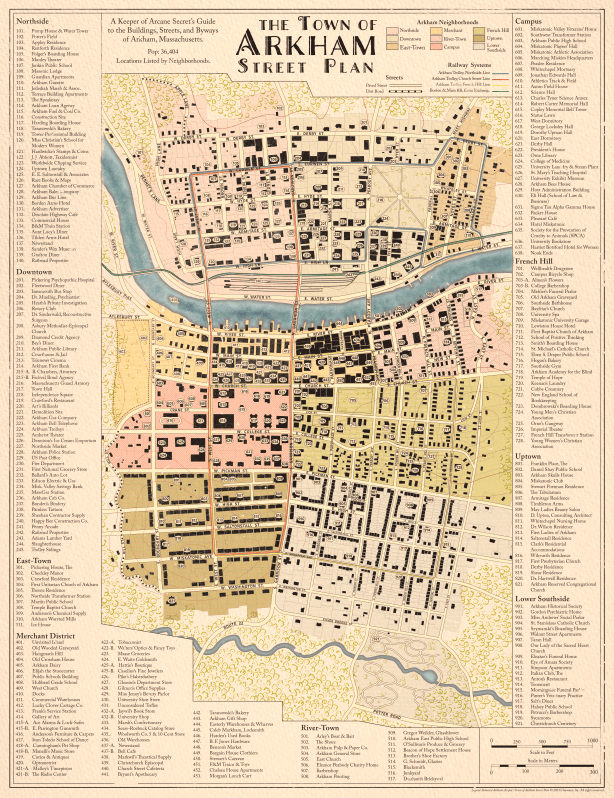
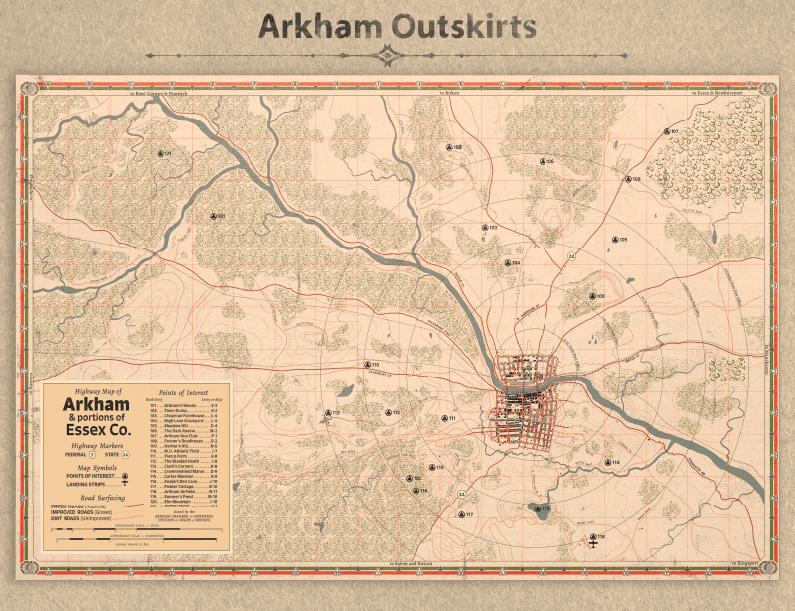
For the referee there is a similar street map, except marking keyed locations. Plus there is a greater Massachusets map showing the Arkham location and other Lovecraftian places like Innsmouth, Dunwich, and Kingsport.
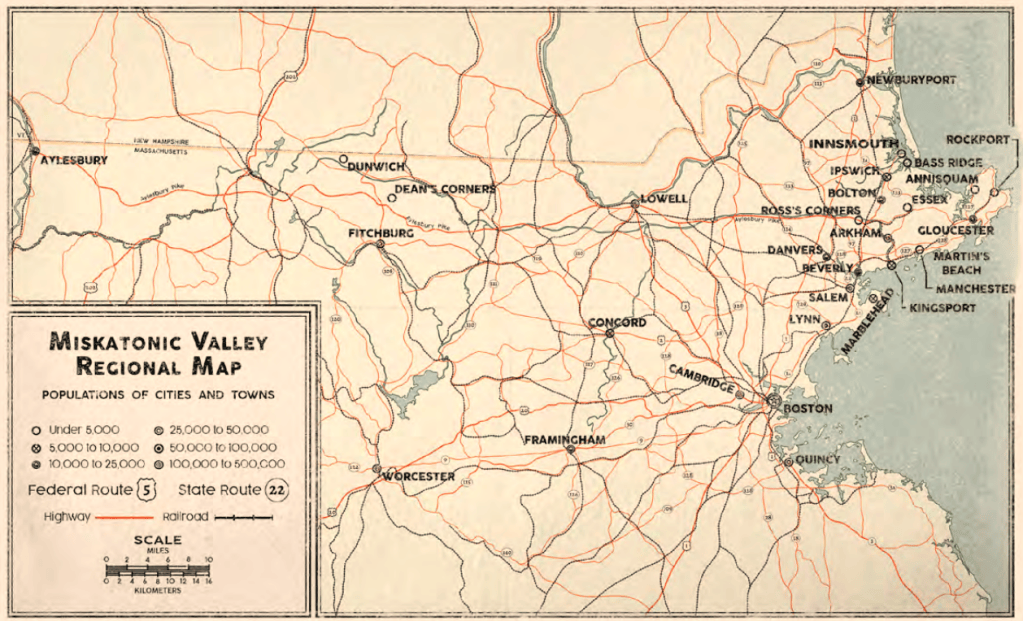
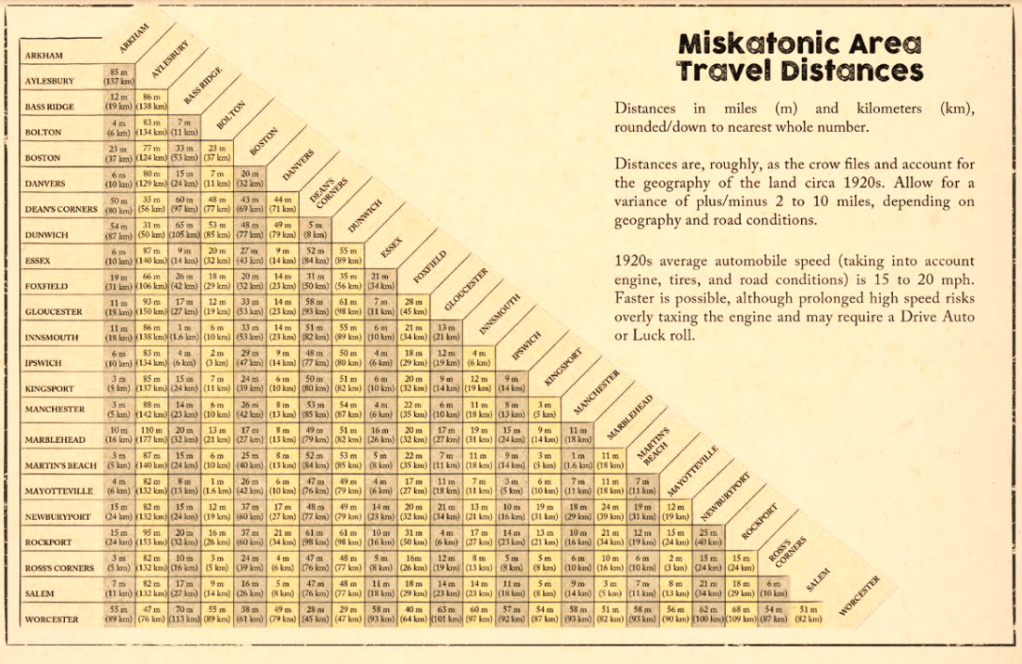
Plus, one of my favorite features, a table of travel distances. One can really appreciate how packed in the local area is. Salem is a mere seven miles away. One could easily walk there in a few hours.
Innsmouth is farther at eleven miles. Still doable should a character want to walk there though one can easily imagine why Robert Olmstead chose to take the bus. It is a long way to carry a suitcase. Olmstead did make his way out by foot. We can see the closest spot is Bass Ridge at one mile away.
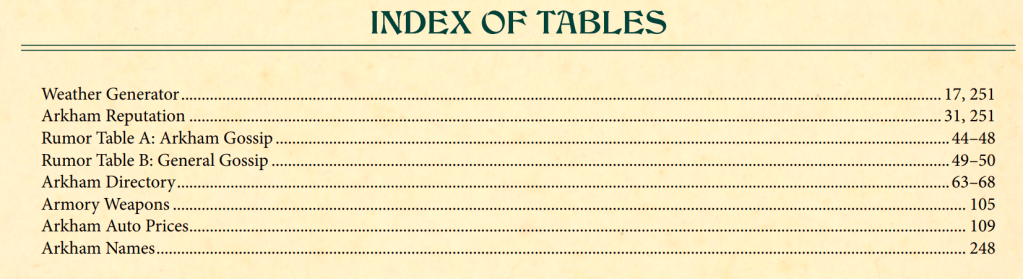
Plus there are some handy tools: a weather generator; town reputation mechanic; gossip tables, common town names, auto prices, weapons in the town armory. All useful.
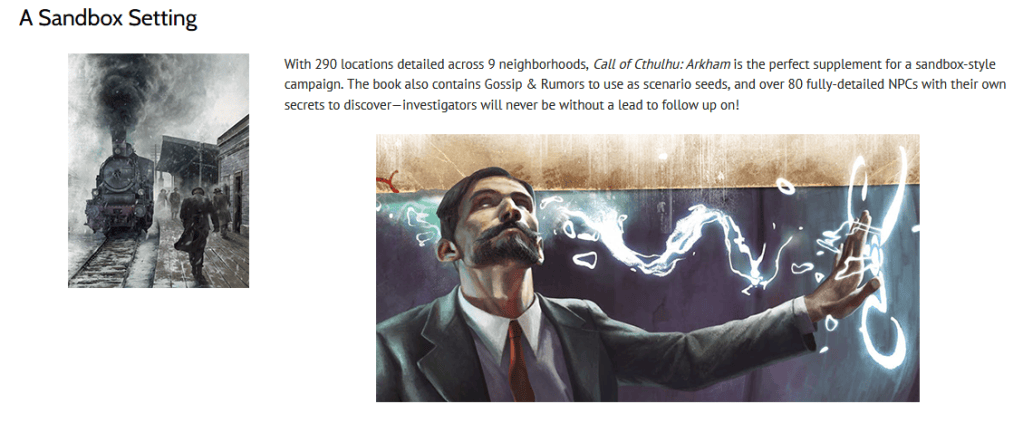
Still I wish for more. Chaosium’s website presents it as a “A Sandbox Setting” and it pretty much lives up to the claim. But it lacks what sandbox settings most need. Random encounter tables.
They left out the scenarios. Perhaps this was just space reasons. I don’t know. But I suspect, the scenarios were left out because it’s a “sandbox”. A key feature of sandbox play is for events to be generated by player characters moving through their environment. In this case, the town of Arkham. I suppose one can send players walking their characters about the city, but mostly unless one is kicking in doors how does one go about encountering all the detailed personages in the book? This was an issue with the original as well. So, I’m not really criticizing. The book is well within the mainstream of thought for Call of Cthulhu and RPGs in general. To the point that even such august a person as Sandy Peterson himself says random encounters “make zero sense” for Call of Cthulhu.
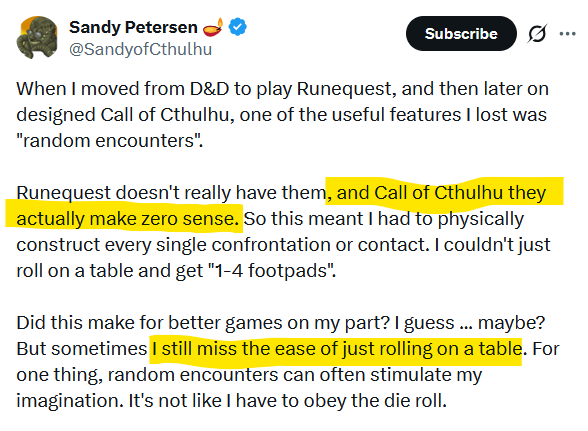
Yet he misses the “ease of just rolling on a table”. I say he should revisit his assumptions. There is more going on with random encounters than merely ease. As he says, random encounters stimulate the imagination. Players play for stimulation and referees deserve stimulation too. Call of Cthulhu is about the inscrutible designs of alien forces at work on Earth, do they really need to be scrutable for the referee? I think not. The effect of apophenia bringing new things into a role playing world is a huge part of the attraction of role playing games and its absense holds back role playing games from their full potential. The full effect of apophenia has largely been absent in Call of Cthulhu because referees have always been relying on pre-plotted modules. Even when referees created their own scenarios, they largely followed the same pre-plotted paradigm of the published scenarios. But it need not be this way. It would have been nice if Sandy Peterson had finished his game, though, I understand, given the era it was made, why that would have been difficult.
As I mentioned earlier, I’ve talked about this before and no need to regurgitate it fully. But, in summary, such an appoach would be:
- Iterative. That is, one would follow a procedure to generate an encounter/event and then, at some interval, repeat the procedure.
- Has a well-defined place or setting. The Arkham book is that.
- Has defined the gods/aliens, the factions with the gods/aliens, their servitor races, their minions, and their followers. The Call of Cthulhu rules plus the Arkham book defines these to a fair degree.
- Randomized encounters.
How to apply this to the Arkham book? Well, let’s look for inspiration elsewhere. Like AD&D. AD&D has an iterative process of generating encounters when players are crossing country in the wilderness.
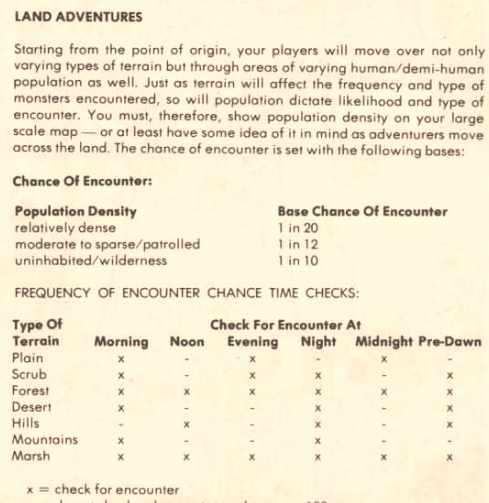
When one of these checks indicates an encounter, what is encountered is rolled from one of several encounter tables based on climate, terrain type, and/or location.
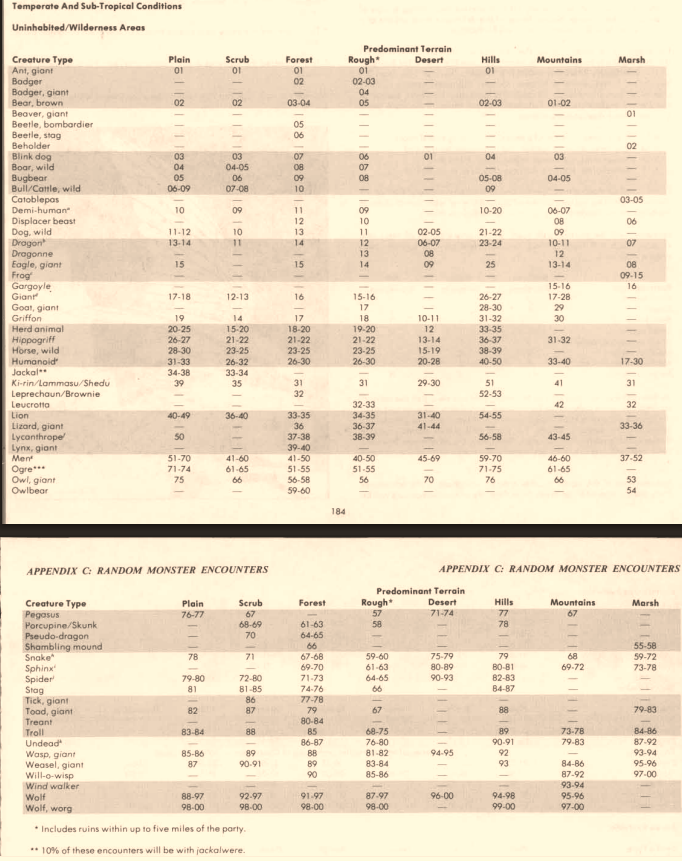
Now these are for encounters in the wilderness. Even sticking to normal encounters, they players probabably won’t be encountering many wolves, moose, or brown bears in Arkham. Arkham, like most cities, isn’t that kind of place. Now, were one creating a setting for Juneau, Alaska one might occassionally meet a bear in town. But, not in Arkham. We need a table for the city. And, AD&D has a table for city encounters.
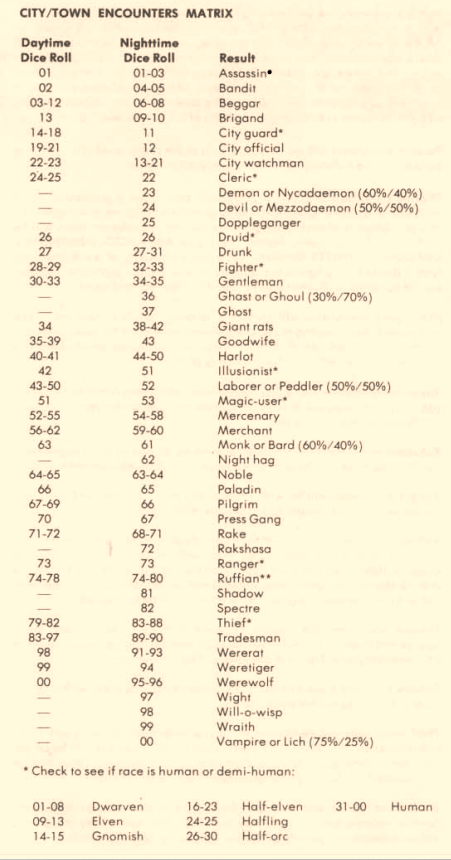
But, the AD&D one is for a generic city. We really want an Arkham specific approach. Here goes. I’m mostly outlining it here. And, eventually I may complete it. But for now here is the idea. First we need encounters for when characters are out and about town. This isn’t necessary literally outside, but at least outside their domocile. And, encounters should vary depending on where one is in town. The Arkham book defines neighborhoods, so let’s use those.
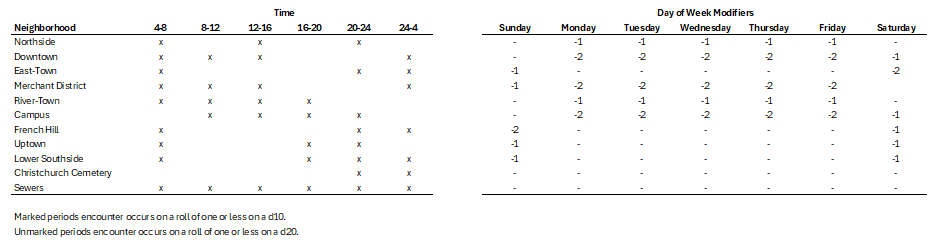
So here is the day broke into four-hour chunks. The periods marked with X have a 1 in 10 chance of encounter; the blank areas 1 in 20. But the day of the week modifies the odds. For example, if one spent a full twenty-four hours walking about Northside, there is a 45 percent chance of an encounter on the weekend, and a 90 percent chance during the work week. Note that no encounter doesn’t mean there are no people about, just none that caught the eye of the character or otherwise there is an opportunity to interact. Though, it is reflective of a general density of people out and about. And, of course, characters likely will only rarely be outside for full 24-hour days. Though, I’d roll for any outing in a period.
Next we need the situation where there is an encounter. Inside is inside whatever building or business is the character’s destination, if there is one. As always, referees will need to use judgement, if an inside encounter doesn’t make sense for the situation, just use the outside column. Again, this is just a draft, the context tables could be subdivided. Detail could be added for inside by additional columns by location types, detail outside could be subdivided by means of locomotion (walking, bus, trolly, etc.) But, it’s possible to have too much of a good thing.
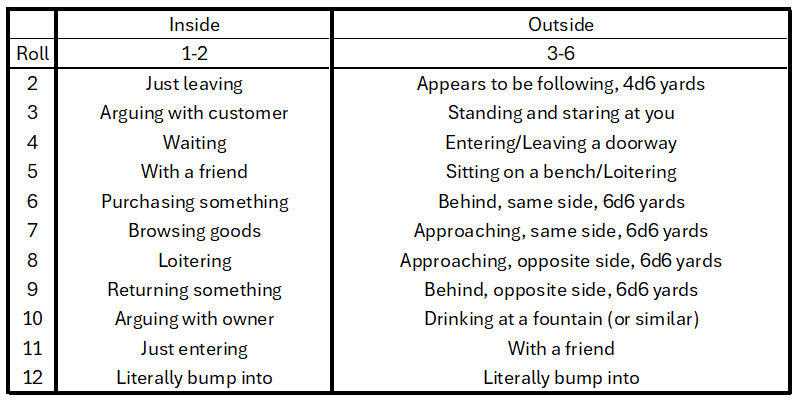
Next we need to determine who it is. While, I’m not going to present it here, I’ll use an example of the Northside neighborhood. The section for that neighborhood, includes something like 94 named personages. So, the whole book has hundreds of named characters. You want to be able to meet them in their neighborhood, plus any other neighborhood. Or, at least most character you would. The table would vary the odds of encountering a specific character based on how likely the character might be found in another neighborhood. For example, a character might be found most likely in his own neighborhood and then secondarily in the neighborhood he works in. Plus, there can be other than characters in the encounter tables. Obviously the cemetary and sewers in particular might have more monsters than characters. But every neighborhood should have some slim chance of encountering a monster. Then, one can develop a monster subtable (also neighborhoods might make sense here).
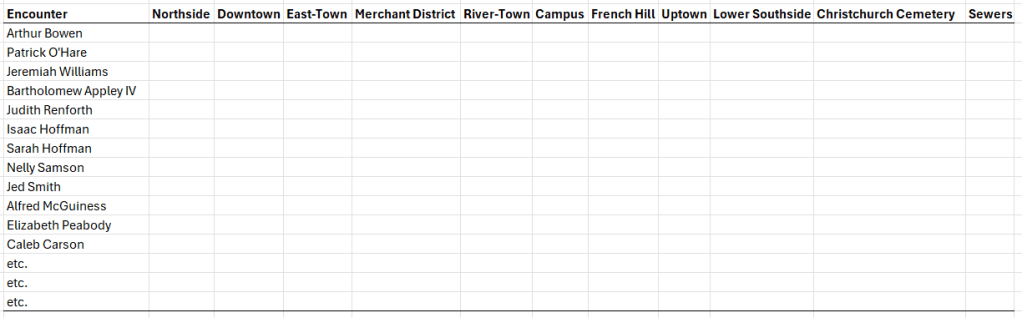
Now, where are we? We have in iterative method determine if there is an encounter. We have the location and circumstances of an encounter, and we have who the encounter is with. What happens in the encounter?
The referee must use his imagination. You can wing it. But, many referees may balk. It’s better to prime the pump with something. That thing is a reaction roll. AD&D has the reaction table. Call of Cthulhu never had this mechanism. Well, I can’t speak on 7th edition, maybe it does have something akin to it. But, I don’t know, never having looked at 7th edition.
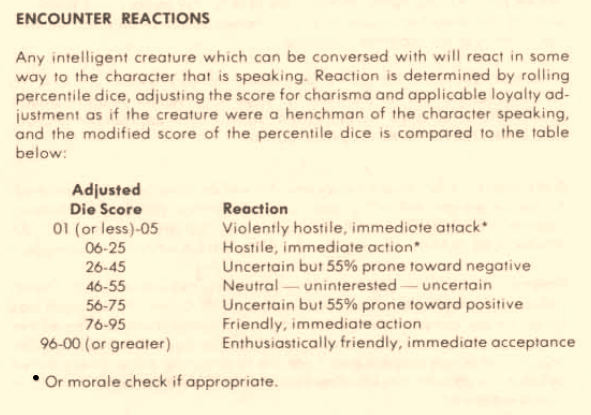
In any case what can we come up with for Call of Cthulhu. Here’s a draft method and thoughts on the matter. At first blush, I say use the resistence table. In AD&D, the charisma attribute modifies NPC reactions. Call of Cthulhu does not have this attribute. I think it should be an opposed Power check. However, it may be that another attribute could be used. If a character has not yet spoken to the NPC and is just observing them, a successful psychology will give a player the option to pick an alternative attribute to use for the reaction roll. Alternative attribute can be Education, Intelligence, Appearance, or Size. Similarly, if the character is in normal speaking distance a successful Fast Talk or Persuade check can have the same effect.
What would a successful check mean? It means the character is noticed. That is, a failed check would mean a neutral reaction. Sometimes that’s a good thing. A successful check means the character has achieved some kind of reaction. Though it may be positive or negative depending on the roll. While one could come up with a defined scheme like in AD&D shown above, I think referee judgement may be adequete in interpreting the roll. My suggestion is that the lower the successfull roll, the more positive the reaction, and, conversely, the higher the successfull roll, the more negative the reaction.
Positive and negative may not mean friendly or unfriendly. Malevolent creatures/characters are not going to be converted to friends from a reaction roll. However, such people may choose to act friendly due to a positive indicating roll. The roll is to determine what the outward facing reaction is.
After determining the time, location, person, and reaction, plus the information about the encountered person included in the book, the referee now has quite a lot to go on to improvise an encounter. And, the player too. Players can always choose to interact with an encounter. Or, they can choose not to and just observe the person or let them go on their way. Similarly, the referee using all of the above context then must choose to what degree the NPC decides to interact with the player.
Not all encounters amount to anything. And, given that many (most) of the Arkham personages are not directly mythos related, many encounters may just be a means of introducing people, their businesses, job, etc to the player. It may be until only later a player realizes that an earlier encounter may be useful to them. “Oh yeah, I do know where we could find a bread truck.” Eventually, character will meet up with mythos related people, and that is where thay may be sucked into the unknown. It is then that the referee can use the details in the book, their knowledge of Lovecraftian fiction (you are reading it right? Right?), and the rules of the game, to craft/improvise events that will become the heart of the game.
Now, I know some will say, gee that sounds like a lot of rolling of dice. Let me suggest it not all be done by the referee. The Call of Cthulhu rules don’t spend much time on how to manage a day of activity. Here is one approach compatible with the methods discussed above.
- For each day, each player uses something like the planner form below to describe their planned activities during the day for each four-hour period.
- For each period where an encounter is possible, the player rolls to determine whether an encounter occurs.
- Sheets are handed in to the referee who looks for confluences where characters might encounter each other, and/or mutual encounters in the same locations. The referee determines who/what is encountered.
- Then the day is played out in the order things occur, bearing in mind that players should be given the chance to modify their later plans based on encounter results, and other confluences. Note that playing out the day does not mean just the encounters (if any) but also the results of whatever the character had been planning to do.
- Once the day has been completed, sheets are handed back to the players to plan for the next day. Repeat.
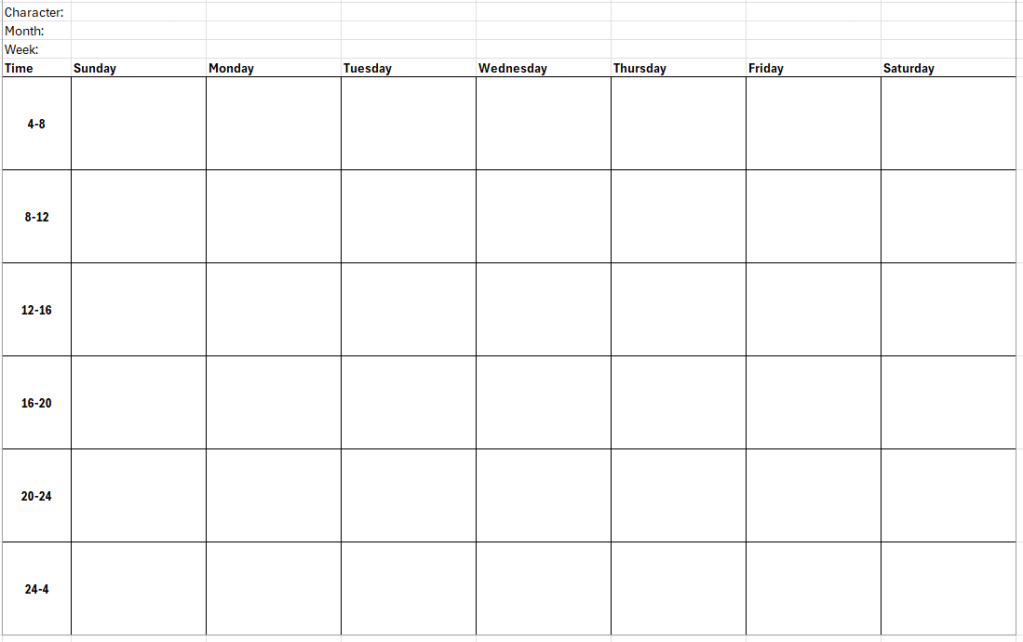
For most days, I expect this process will go quickly because many orders will be rather humdrum. For example, a character reading some ancient tome for a month or more, might have a typical order of:4-8 get breakfast and travel to the library, 8-16 read, 16-20 travel home eat dinner, 20-4 sleep. Such an order would only include two encounter rolls.
Now, of course, eventually it will all go off the rails. But, there may be a whole lot of not much going on. Lovecraftian fiction isn’t action adventure, it is a slow build toward the unveiling of horrible secrets. And, the Arkham book does include horrible secrets to slowly unveil.
What characters should players play? Well, one can do the usual and make up unique investigators. But a fun exercise is to roll randomly to choose one of the local Arkham characters to assume the role of. Some of the players could well be the villains of the place. That too will move effort away from the referee and onto the player’s shoulders. The closer to a Braunstein you get, the less the referee need come up with everything.
There you go. The book is good, even excellent for its type, though I wish for more in terms of structure. There could be more direction and tools for how to play out a day in Arkham. Yet, by dispensing with the scenarios that were included in the original volume, they have taken a refreshing (if small) step toward true sandbox and apophenic play.


Leave a Reply