
GangBusters RPG famously gives each carreer unique ways to earn experience points, including, for criminals, extensive discussion of means such as bootlegging, running speakeasies, bookmaking, gambling, loansharking, racketeering. What it doesn’t discuss is sports. And, in particular boxing.
Every sport has some level of criminality associated with it — illegal betting and fixing outcomes is relatively frequent across all sport. But, boxing has a keen reputation for corruption. But, how can we fix fights if we don’t have any rules for the sport itself?

Boxing for GangBusters
GangBusters already has a quite nice set of rules for fistfights. Use those. But, to run a boxing match here are some additions.
- Gloves — sanctioned matches will be using boxing gloves. Boxing gloves have several effects. The first being to protect the hands of the person wearing them. But, this protection changes the game, the switch from bare knuckle to gloved boxing changed how hard a boxer could strike without injuring himself. And, it changed where a boxer could safely strike with less chance of injury. The game switched from long bouts, wearing an opponent down with body shots, to a greater frequency of head shots and knock outs.
- Optional for all fistfighting. For every point of injury (bruises or wounds) done to an opponent there is a 1 percent chance of taking a point of wounds. Wearing gloves removes this chance.
- Wearing boxing gloves may increase damage. Make a successful Muscle check. Success makes the damage to be 6 points. Failure the damage is normal.
- For cheaters gloves may by a place to conceal items illegal in the ring. Weighted gloves remove the muscle check, all damage is six points. Salt or other blinding powders used against an opponent divide their odds of punching successfully by three.
- Knockdown. The normal GangBuster fistfighting rules do not cover knockdowns which are a big part of the boxing point system. Whenever a fighter is struck in the head or neck for full damage, he must make an Agility check or be knocked down. Whenever a fighter is knocked down the referee must make an Observation check, failure triggers a Time Check for the round (see below). A knocked down fighter is allowed to stand up prior to the fight resuming. The opponent may choose to Fight Dirty and attack a downed opponent, a referee who makes an observation check may attempt an “Holding” action to prevent such an attack. Note: if using the knockdown rule in non-boxing fistfights, being knocked down allows an opponent to use the Fighting Dirty action without penalty.
- Hit Location. Use the normal hit location table but treat the 3 points values as 1 point of bruises. Reroll hits to the leg. If the hit was made using Boxing Skill, the boxer may choose to shift locations up to three places in either direction. Hand hits to an opponet wearin boxing gloves do no damage.
- Fighting Dirty — in addition to the normal effects of fighting dirty, the victim must make an agility check or be knocked down. Note: if attacked while knocked down the knocked down character must succeed at an Agility test to stand up.
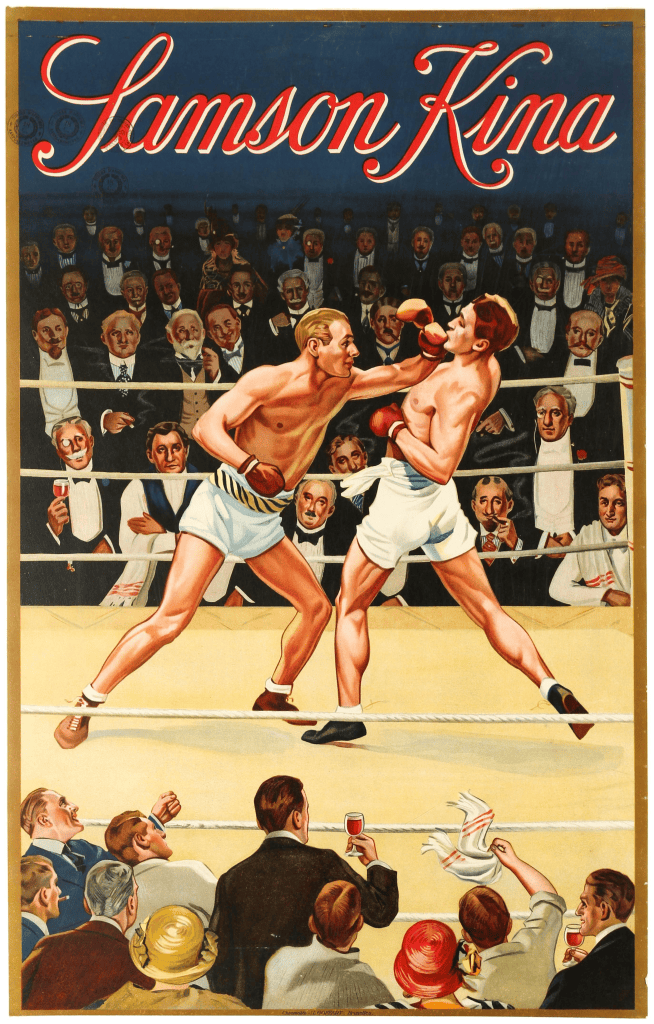
- Referee — a boxing match has a referee. The referee’s job is to enforce the rules.
- If a fighter chooses to fight dirty, if the referee makes a successful observation check, assign a foul to the dirty fighter. Also, fouls may be incidental, at the end of each round, each fighter makes a Presence check, if one fighter succeeds and the other fails, the failing fighter is assigned a foul.
- Clinches. At times fighters may go into a clinch. This is a “holding” action. If the referee makes a successful observation check, he’ll attempt to break up the hold. Note, the holding fighter may choose not to break the clinch, in which case the referee will assign a foul if the fighter fails a presence check (subtract from Presense per the persuasion rule).
- A mentioned earlier, if a fighter attempts to attack a downed opponent, then the referee must succeed at an observation check to attempt a “Holding” action to prevent the attack.
- Martial Art throws are not allowed per the rules, but if a referee fails a Observation check, with a -20 applied to the roll, a throw might be missed. Observed throws will be called as fouls.
- Disqualification — fighters attacking another while he’s down will be disqualified as will any fighter discovered with loaded gloves or other items hidden in gloves. After the second foul (in a round) a fighter will receive a warning and every subsequent foul requires the referee to undergo a persuesion test to avoid declaring disqualification. Disqualification may be declared if it appears a fighter isn’t fighting (e.g. not attempting to punch in a round) or if holding excessively (e.g. three or more attempts to hold in a round) — if these occur the fighter may may a Luck roll to avoid being disqualified. Similarly, if people associated with a fighter enter the ring, enter the opponent’s corner, and/or assault the opponent, the referee, or the oppoent’s staff (trainer, coach, etc.) then that fighter is disqualified.
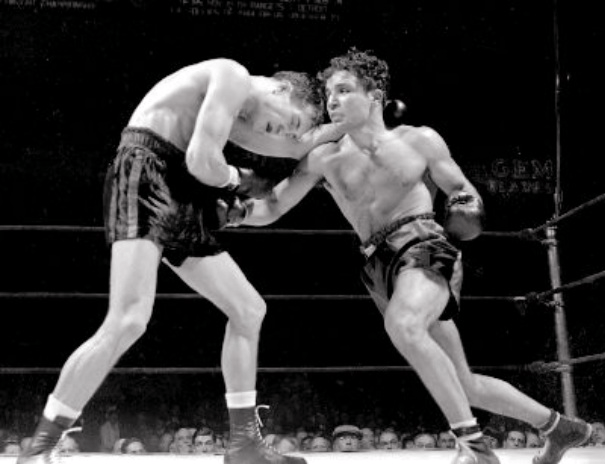
- The Round — each bout takes a number of standardized rounds. Normal fistfights are quick and dirty affairs. Boxing matches take longer. Any time a boxer successfully carries out a “breaking free” action or any time both both boxers choose a “maneauvering” action, a round check is made. To carry out a round check average both boxer’s Observation scores and divide it in half to determine a Time Check value. Rolling under the Time Check value indicates the round has ended. Between rounds, if a fighter has a trainer or coach with him, he automatically regains 3 h.p. of bruises before the next round.
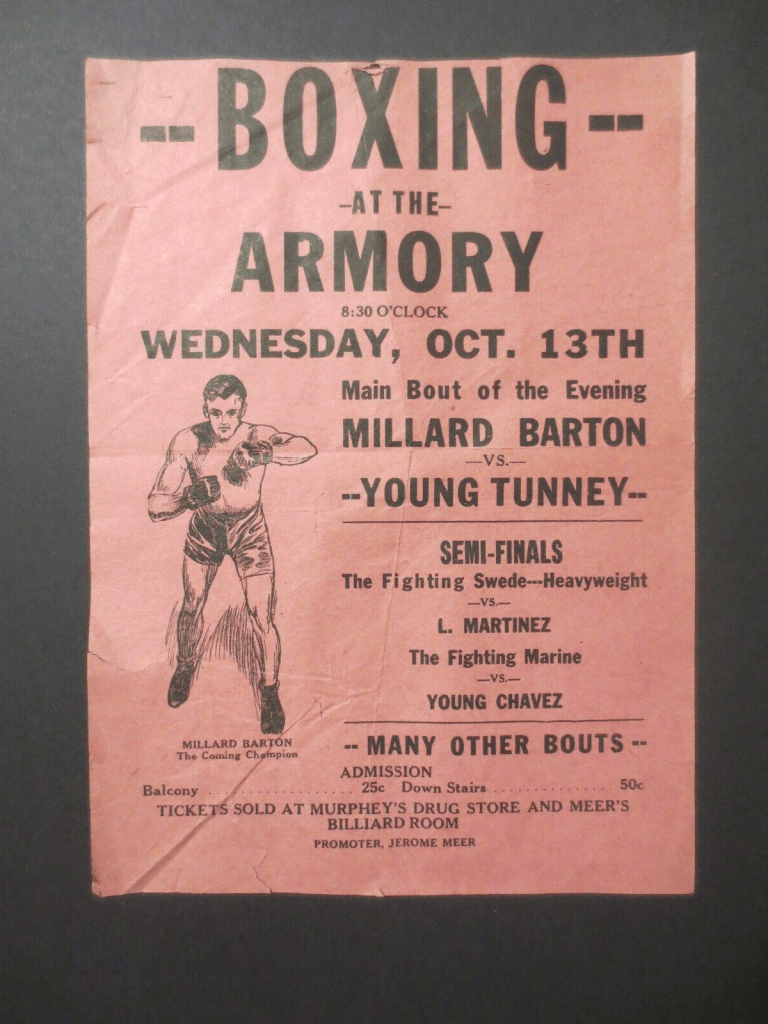
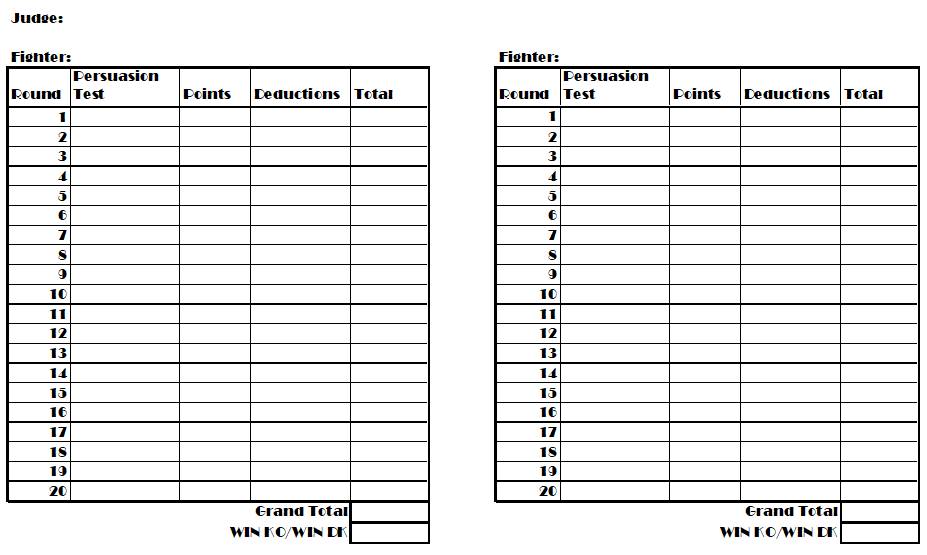
- Scoring. The winner of a bout is determined by a panel of three judges. The judges watch the bout and each round assign a score assesing which fighter performed better during the round. The winner of the round is assigned ten points, the lose nine points. At the end of each round each fighter makes a persuasion test (as modified for damage using the persuasion rules) against each judge. If one fails and the orther succeeds then that judge awards the round to the fighter who succeeded. Ties, are resolved by repeated tests until one fighter fails and the other succeeds. Then, points are subtracted based on any fouls (assigned by the referee) and specific events of the round. Penalties include:
- Landing fewer punches, -1
- Each knockdown, -1, note if both fighters are knocked down cancel deducions (ie. one fighter is knocked down once, the other twice, the second fighter only gets -1 point)
- If one fighter did substantially more (> twice) damage in the round, -2 to the fighter that suffered the damage.
- Referee assigned fouls, -1 per foul.
Unanimous decision: All three judges decide the same fighter earned the most points.
Split decision: Two judges decided one fighter earned more points, and the remaining judge decided the other fighter earned more points.
Majority decision: Two judges decided one fighter earned more points, and the remaiming judge had the match as a draw.
Draw: When two judges decide the fight a draw, the match’s result is a draw.
Majority draw: When one judge decides for one fighter, another judge decided for the other fighter, and the remaining judge decides the match was a draw—the match’s result is a draw.
Disqualification: If a fighter is disqualified then the win is gvien to the opponent. If both fighters are disqualified then it’s a double disqualification and the the bout is declared a no-contest.
Knockout: if a fighter knocks out his opponent, he’s declared the winner.
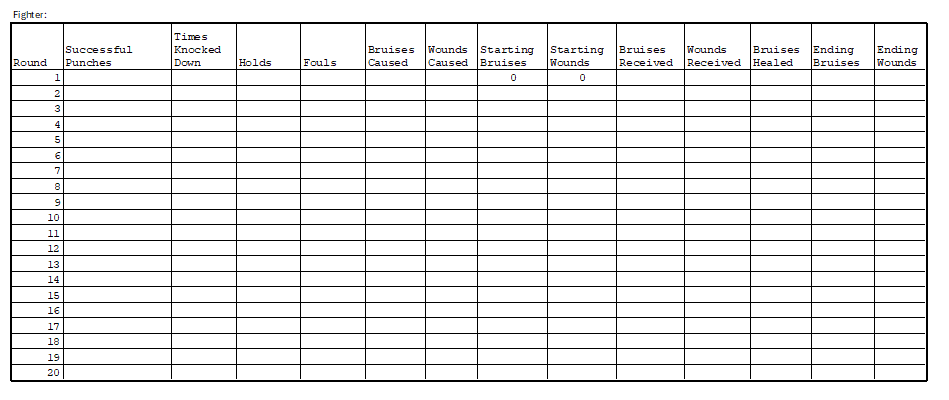
Boxer Bout Record Sheet
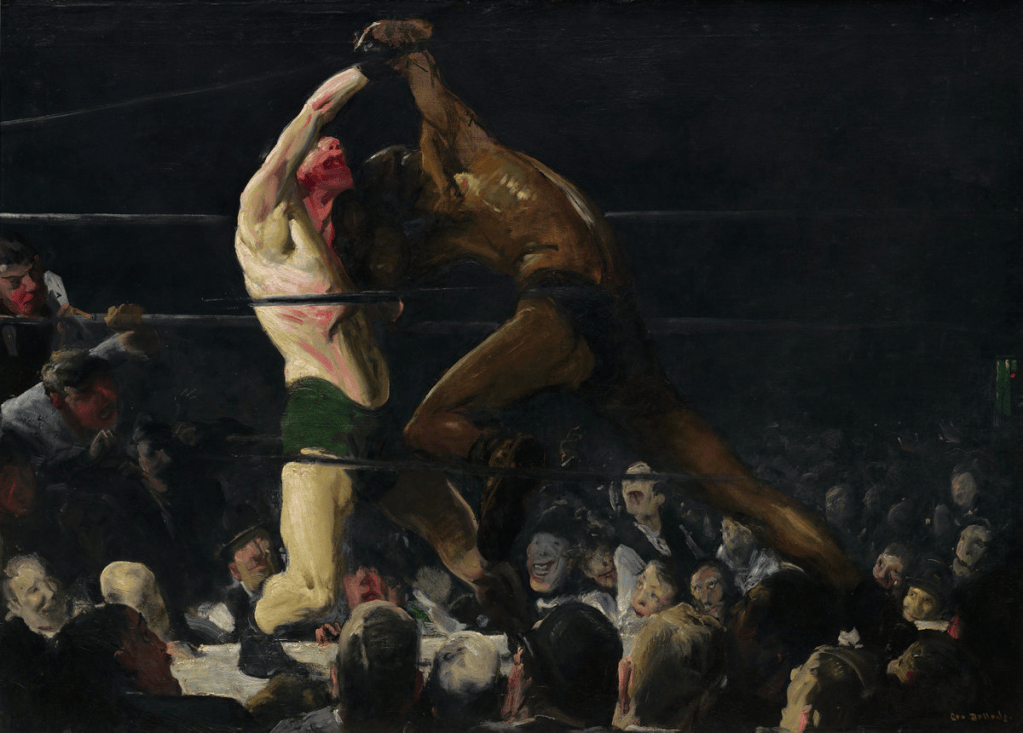
Weight Classes
Unless boxing informally, boxers fight within their weight class. Sanctioned tournement matches will always use the weight class system.
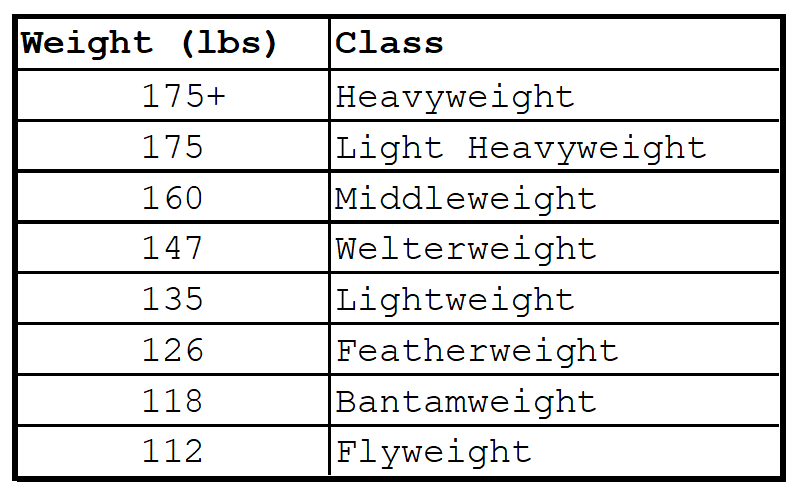
While the standard rules allow players to choose between height and weights (for different categories of Muscle rating), a more randomized determination of height and weight will bring more variation and challenge to what weight class a character might fall into.
Optional Rule: Weight gain. for every week for which a character has no successful Nutrition test, they gain 0.25 pounds.
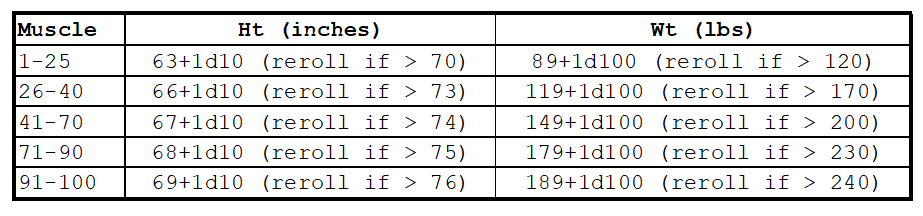
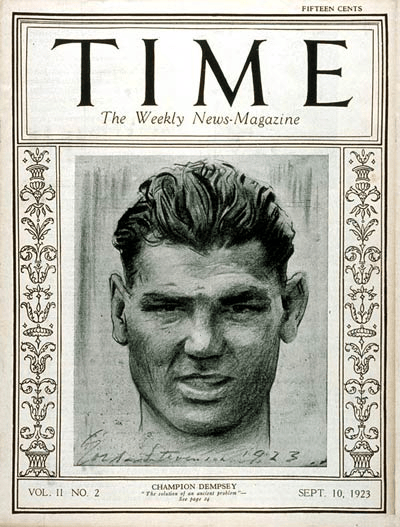
Jack Dempsey on Time, September 10, 1923
Boxing as a Career
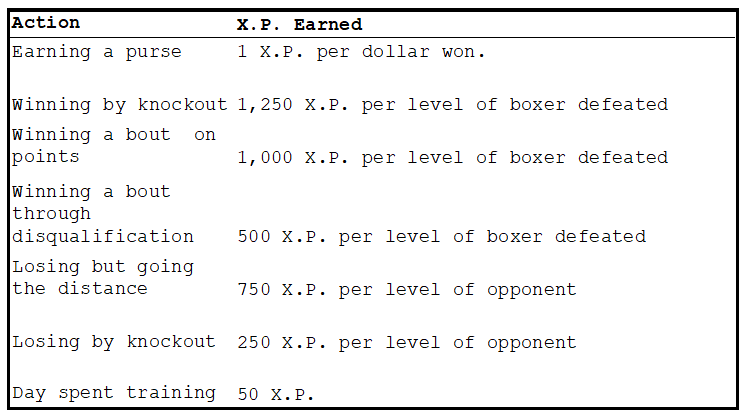
Boxers gain XP and level as per the Character Advancement Table. The first skill purchased with XP must be either Boxing or Martial Arts. Note that while martial art throws are not allowed per the rules of boxing, it is possible to get away with an occassional throw if the referee is inattendant. Other standard skills that may come in handy for a boxer are Public Relations, Gambling, Accounting,
Only Boxers who have obtained either the Boxing or Martial Arts skills will be allowed to fight in professional matches.
Skills
Following are several new skills that pertain to Boxing but also may be used in other contexts as well.
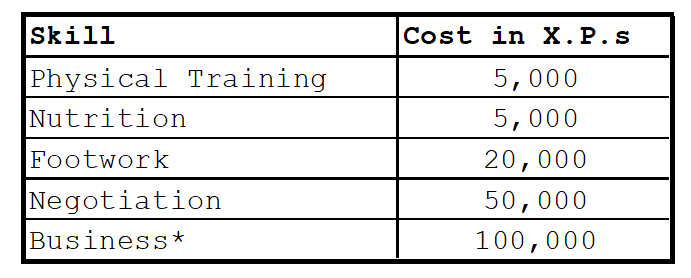
- Physical Training is exercise used to improve Muscle and Agility. Thirty days of uninterrupted physical training and a successful physical training test, allows spending X.P.s on improving Muscle or Agility (player’s choice) at half the cost and double the improvement rate. For example, 30 days of physical training would allow one to gain two points of muscle at a cost of 1,000 X.P.s.
- Nutrition is the science of managing one’s food intake in order to lose weight or gain weight. Seven days of practicing Nutrition and a successful Nutrition test allows one to subtract or add up to three pounds from one’s weight. If more than six pounds are lost in a thirty day period, then a character will lose Muscle in the form of 1 point for every two pounds lost.
- Footwork is practicing quick and unexpected movement while Boxing. A character must already have the Boxing skill in order to purchase footwork. Footwork acts in conjunction to the Maneuvering Action. A successful footwork test while offensive maneauvering raises the opponents penalty to -15 to his agility test to Break Free. A successful footwork test while defensive maneauvering raises the penalty to Agility while striking or attempting a Hold.
- Negotiation is the art of the deal. This is used whenever a contract or a deal is being cut for money, the price of an item, compensation. Both sides roll tests against their negotiation skill plus Presence. If one side is successful and the other side unsuccessful then, the winner gains a five percent shift (up or down) in his favor, In addition the winner gets an additional 5 percent shift for every ten percent less than his skill level that is rolled. Note if both sides success or both sides fail, then the split is 50/50 .
- Business is the skill for running a business enterprise. It is not negotiation but of understanding what is necessary for a business (legit or criminal) to thrive. For the person running a business, for each week that they make a successful Business check, the weekly profit is increased by ten percent. For example, a speakeasy may normally earn on average $875 per week, a successful business check for that week increases the profic by to ten percent to $963.
Purses
The purse is the money that is available to be paid to the contestants in a bout.
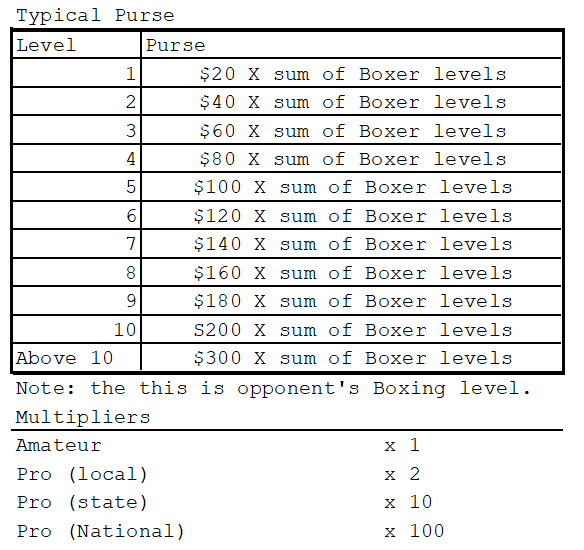
The purse shown in the table is the total purse to be split 50/50 between fighters. The split between opponents is negotiated prior to the bout. Typically, the divide will shift 5 percent for every level difference between Boxers. For example, a 6th level boxer facing a 3rd level boxer, the 6th level will get 75 percent of the purse to the 3rd levels 25 percent. Only in unusual circumstances will boxers agree to more than three levels of difference between fighters. Successful use of public relations may shift these ratios another 5 to 10 percent. Successful use of Negotiation skill can shift it farther.
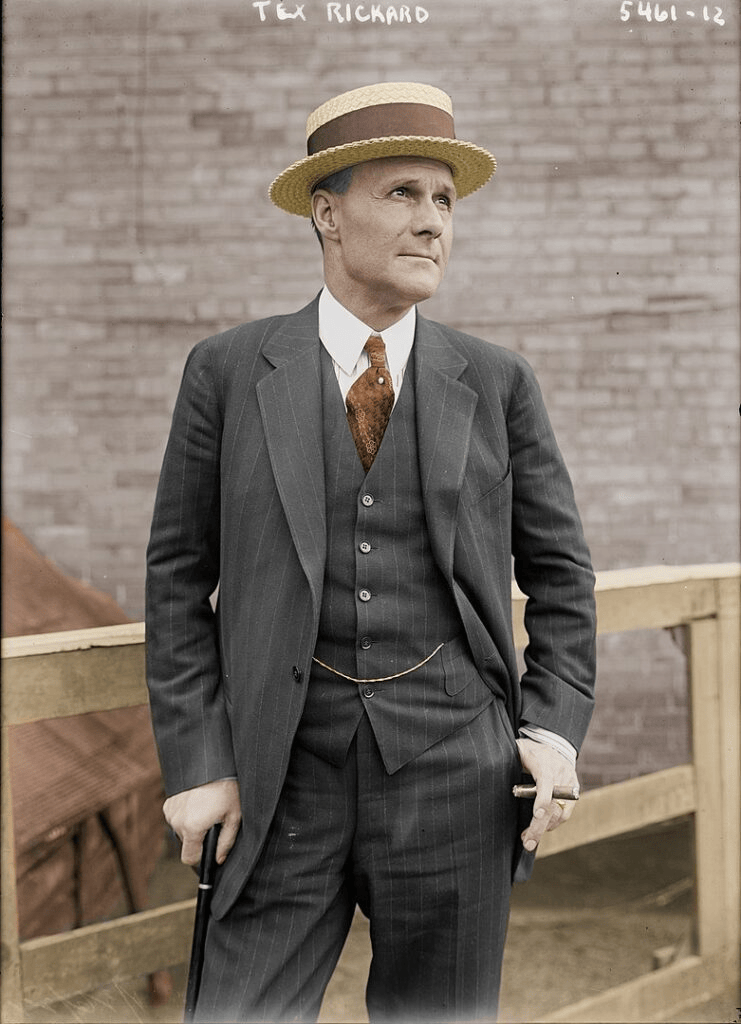
Tex Rickard, Boxing Promoter, founder Madison Square Garden in 1923
Staff
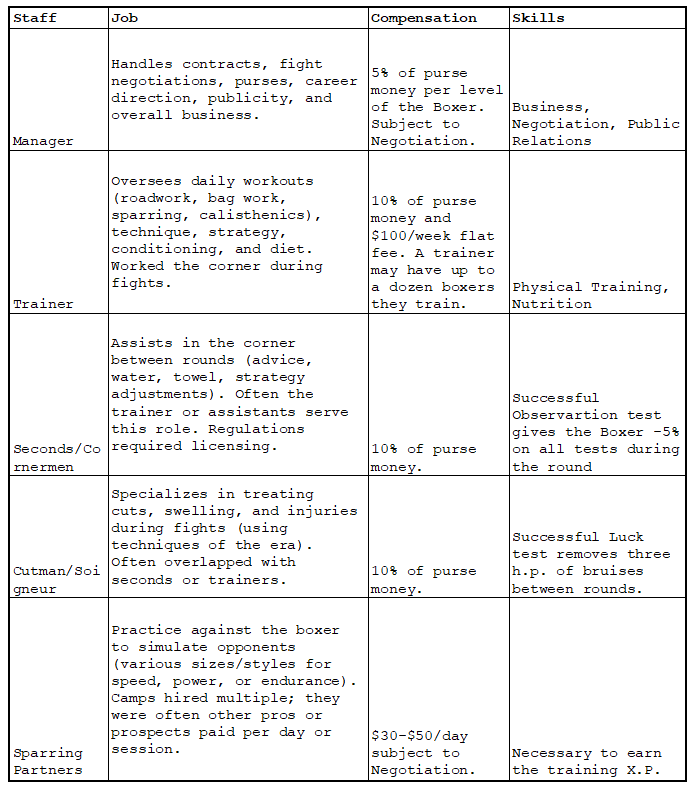
Some staff exist to provide skills that the boxer does not have, or superior skills than the boxer has. If the boxer hires the appropriate staff and puts in the work with them, then the boxer need not roll his own skill level for things like Negotiation, Physical Training, or Nutrition.
Other staff exist to provide specific benefits in the ring. A trainer may serve as a cornerman or cutman, but a boxer may choose to hire specialists who have greater skills in these areas.
Sparring partners are a big one. To earn the training X.P., one must have a sparring partner that is within three levels of the boxers level. At levels one through three, Boxers who agree may serve as each other’s sparring partners. Past level three, sparring partners must be paid.
Corruption
Boxing is not without corruption. Referees and/or judges may be bribed. In which case, the referee or judge will favor the side they have been bribed to favor, regardless of rolls.
Boxers also may be bribed to throw fights in a variety of manners.
Managers may steal purse money from their boxers. More on this later.


Leave a Reply