
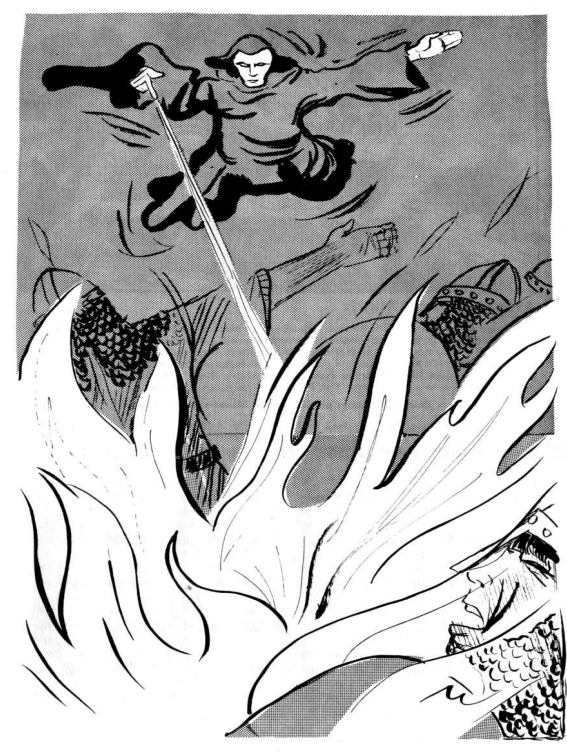
This video inspired this post. The video purports to be a statistical comparison of the Fireball versus Cloudkill spell. In reality, the video is an explanation of some statistical concepts. It’s well worth watching for the statistics talk, but it never really comes to any conclusions regarding the two spells. So, kind of disappointing in that way. Also disappointing was it is looking at the wrong version of D&D, which we all know is AD&D 1e. But it got me thinking. I haven’t played a magic user in a long time, so haven’t really thought much about Fireball versus Cloudkill.
A review of the AD&D 1e version of the spells shows that the videos approach of comparison will not work. The reason for this is, the statistical approach shown in the video is comparing hit points of damage done by the spell. And, well, while Fireball does 1d6 per level of the caster, Cloudkill doesn’t do damage in hit points. Really. Cloudkill does not do damage in hit points. Cloudkill just kills you. Cloudkill kills, with no saving throw, any creature of less than 4+1 hit dice. 4+1 to 5+1 hit dice get a saving throw at -4, while 6HD creatures get a normal saving throw. It’s an apples versus oranges situation.
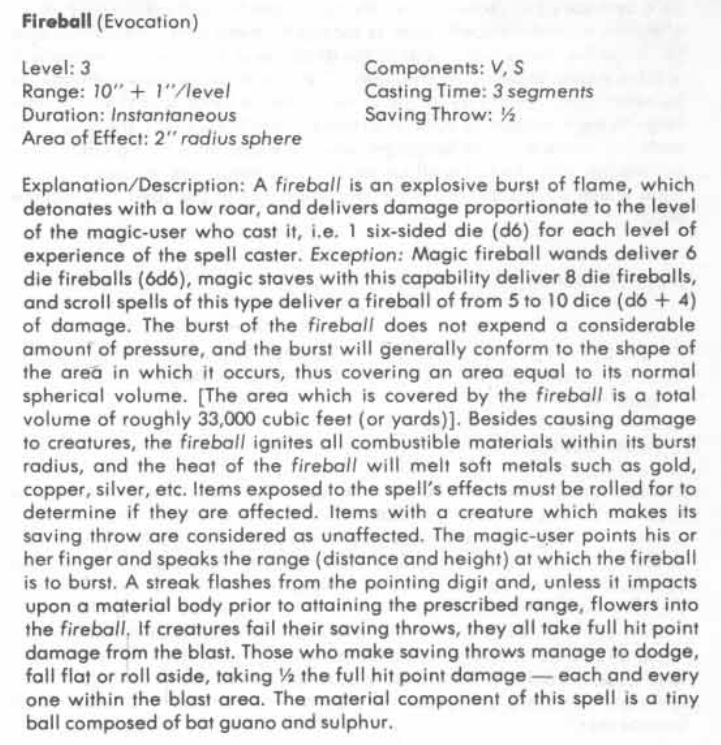
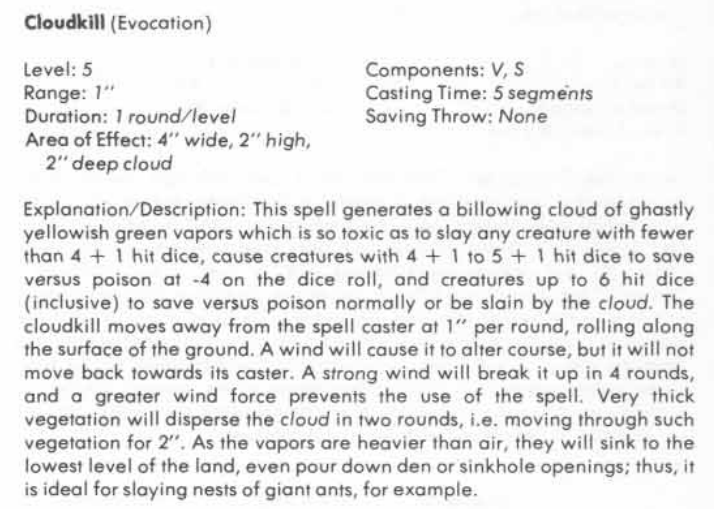
Creatures above 6 hit dice are impervious to the effect of Cloudkill. Or, are they? The DMG has this note on the spell.
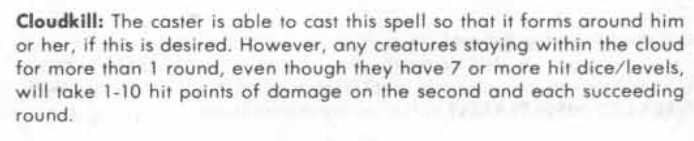
So, greater than six hit creatures have one round to get out of the area of effect, or they too start taking damage, no saving throw. In general though, Cloudkill is effective on 6HD or lower.
So, let’s look at formations. AD&D does not go into detail about formations, but the earlier Swords & Spells does. A typical human formation as shown in Swords & Spells, is represented at one figure equals ten men. 1″ = 10 yards, the same as AD&D.

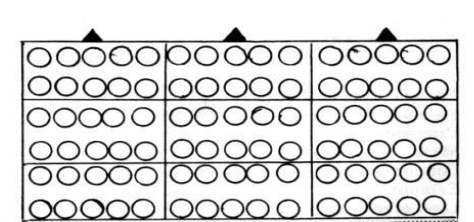
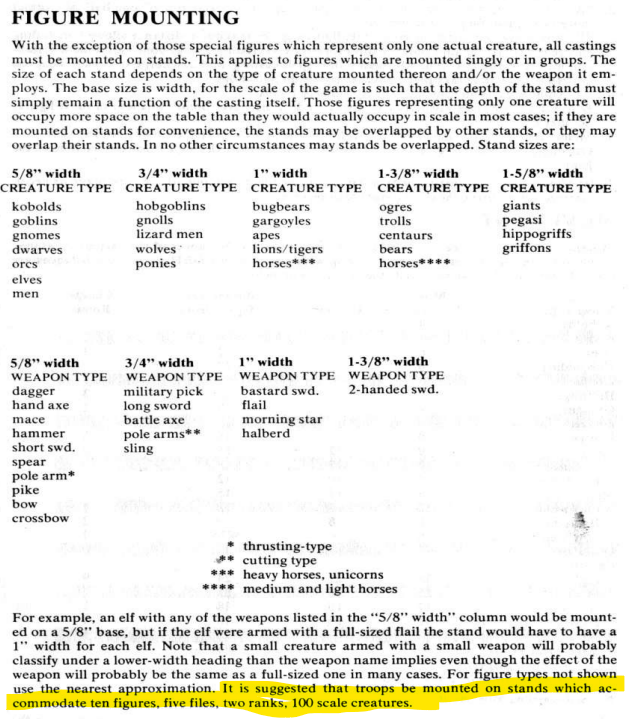
So a unit of a hundred men of scaled spear men is five men wide and thus 5 x 5/8 = 3.125″ wide and 2 x 5/8 = 1.25″ deep. A Fireball is a 4″ diameter sphere. Cloudkill is 4″ x 2″ x 2″ volume. The diagram here shows roughly the footprint of the Fireball (red) and Cloudkill (green).
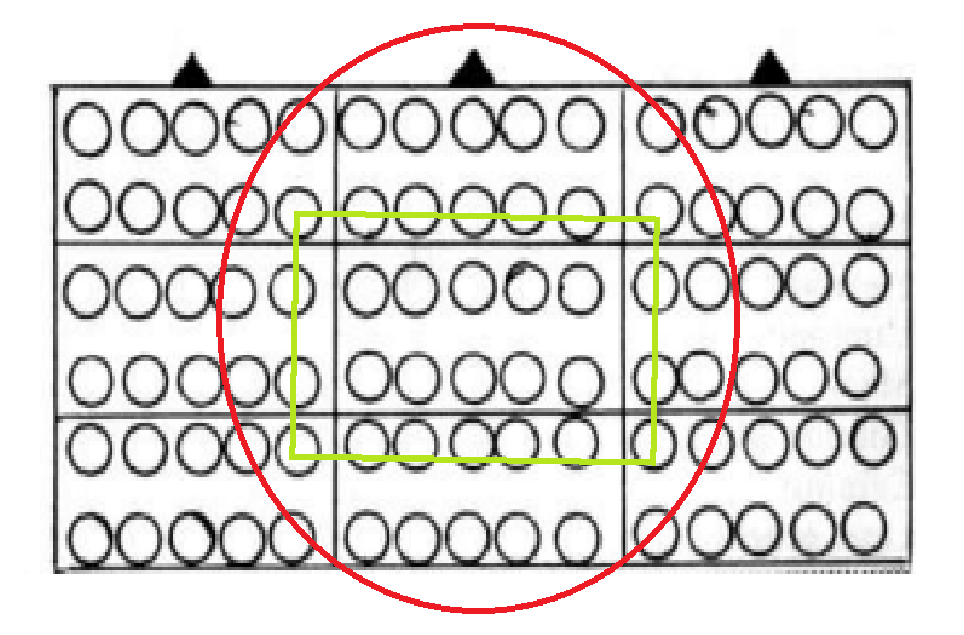
Normal soldiers will all be of less than 1 HD and thus Cloudkill is pretty much gauranteed to kill outright an entire company, and likely do significant damage to a massed regiment. Fireball, unless they save and the roll is very low, likely kills up to three companies of massed infantry and also severely damages the rest of the regiment.
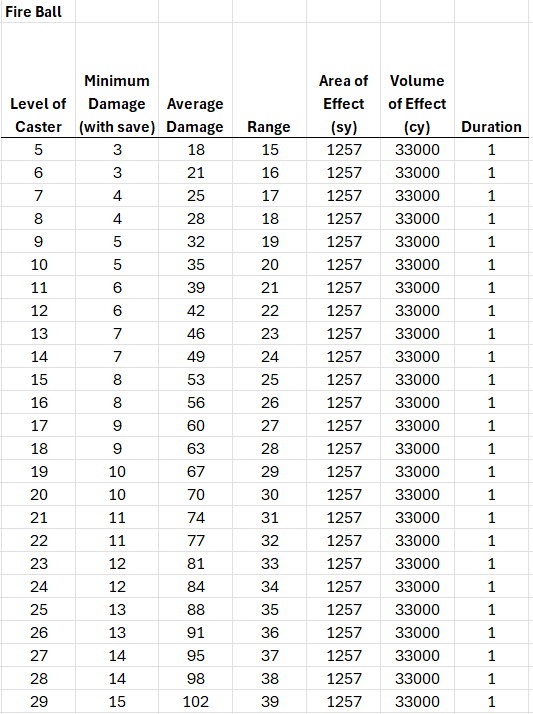
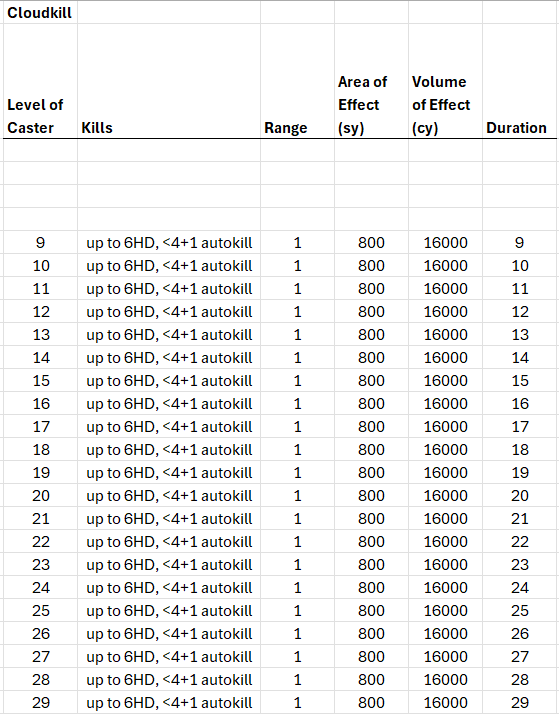
But how about deploying them. Fireball starts with a range of 15″ and gets longer with the level of the caster. This means the caster can hit a regiment most likely from outside their charge distance. Cloudkill only has a range of 1″ but then moves away from the caster for many rounds. So, one must either let the target get very close, which is dangerous for casters, or deploy it early and hope that the cloud intercepts unit. Units will often have chances to maneuver around Cloudkill. But if they don’t, with clever deployment, the cloud may get several rounds of moving through the enemy troops, possibly even several enemy formations.
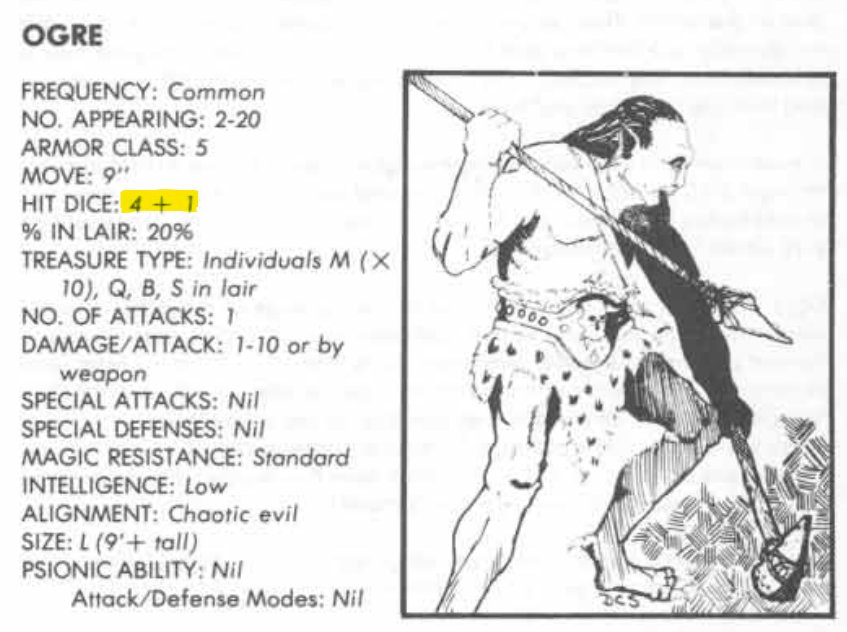
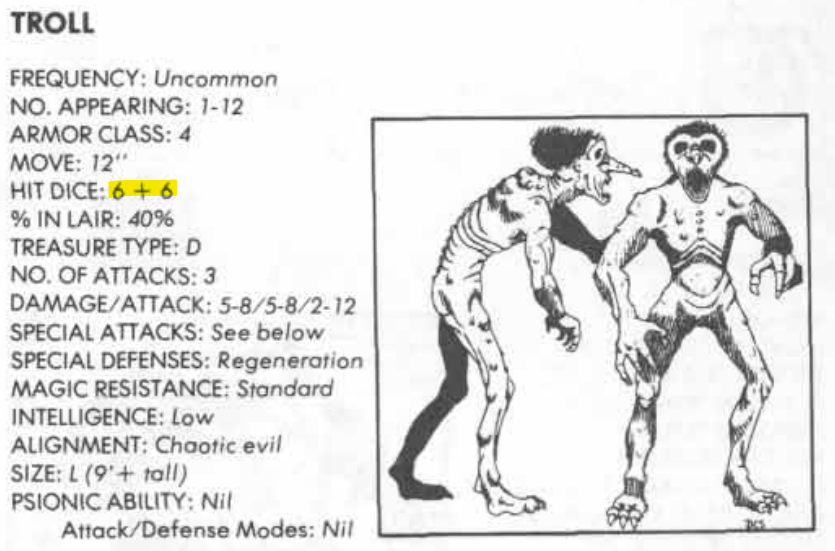
For Cloudkill, what about the 4HD cutoff? Well, many enemy armies will be composed of various man-sized monsters of usually less than 4+1 hit dice, orcs, goblins, etc. These armies might have a few heavy hitters, ogres, trolls, giants, etc. The smallest of the heavy hitters being the ogre. And, look at that, the ogre nicely sits at 4+1 hit dice. Goblins won’t survive, ogres might survive, giants and trolls will survive a Cloudkill. But a Fireball, from a sufficiently powerful wizard, can potentially take out the heavy hitters. Thus, the utility of Cloudkill is really focused on battlefield conditions.
So, in summary, Fireball is more easily (and more safely) deployed, does its damage instantaneously, likely has a greater immediate effect on massed troops, and has the potential to have a greater effect on high hit dice creatures/characters. Cloudkill, can act over a longer period of time, has the potential to destroy or significantly damage multiple regiments, and additionally acts as a disruption to maneuvering an army in general. In some ways, Cloudkill’s main ability is to limit moving through parts of a battlefield over time in a way that Fireball cannot do.
Plus Cloudkill obscures vision and thus can block opposing spellls (like magic missile or, ahem, fireball) and cover retreats. Cloudkill is about controlling the battlespace while fireball is about killing things. Though, Fireballs ability to start fires should not be forgotten or discounted as that can also be used to limit maneuver and create smoke.
Addendum:
It is interesting the in Chainmail Fireball has a 2″ diameterand Cloudkill is 3″ x 6″ x 3″. In Swords and Spells Fireball has 4″ diameter, and Cloudkill a 3″ diameter (circular not rectangular). AD&D kept the Fireball diameter from Swords & Spells, but goes back to Chainmail shape, but makes it smaller (4″ x 2″ x 2″). So, the progression is to increase the power of Fireball while limiting Cloudkill, despite Cloudkill being the higher level spell.

 Fluid -- Druid
Leave a comment