
One common criticism of Dungeons and Dragons is the claim that often monsters, in particular dragons, being found in dungeons where they would not fit. How, it is asked, did that ancient dragon end up eight levels down in the dungeon? It’s a complaint even purveyed by some well-respected early founders of the RPG industry. I won’t go into names, out of pity for the aged apparently losing their wits. But, I will go into why this complaint, at least as it applies to AD&D first edition, doesn’t really hold water.
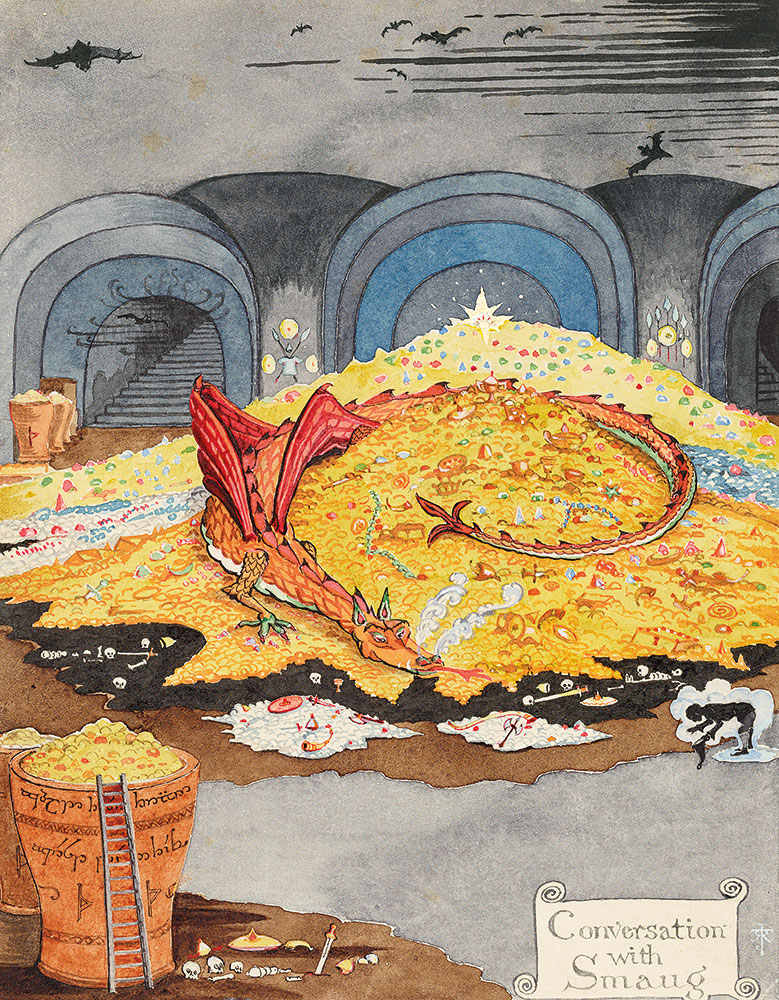
Tolkien famously painted Smaug sleeping on his pile of treasure. We can easily see that Tolkien has quite sensibly sized the stairs and corridors to easily allow Smaug to pass through. Obviously, the architecture here is of heroic scale. But, D&D is also a game of heroics. Estimating from the size of the hobbit in the picture, we can guess Smaug is about forty to fifty feet long. And there in the DMG, the red dragon is listed as forty-eight feet long.
I’ve written of dragons a bit before, here and here. I realize I did some analysis of dragon dimensions for AD&D already as part of estimating the carrying capacity of dragons for jousting. The assumptions here being that the lengths of the dragons listed in the Monster Manual represent fully grown examples, and that the younger ages of dragon are smaller. Similarly, I’ve assumed an aspect ratio of Length to Width between 5 and 8, with this ratio getting smaller as the creatures ages. That is, like lizards (and people for that matter), dragons tend to be born slimmer and get stockier with age.
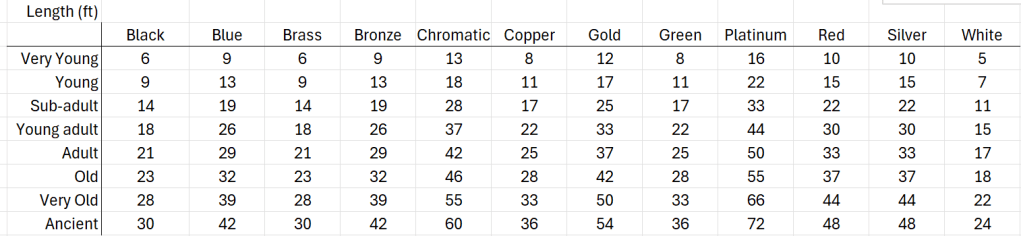
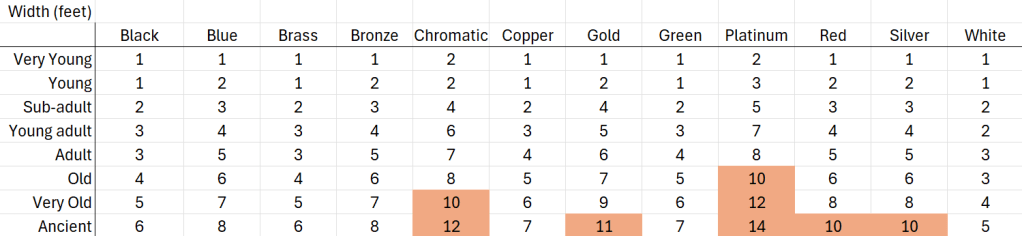
So, here, under reasonable assumptions of length to width, only the largest and oldest of dragons reach widths of ten feet or greater. And, everyone knows the standard dungeon corridor width in D&D is ten feet wide. Or, is it?
Appendix A of the DMG sets out the means in AD&D for generating dungeons. We can see that sixty percent of the time, the dungeon width will be ten feet wide, five percent of the time the passage will be five feet wide, and the remaining thirty-five percent of the time the passage will be greater than ten feet wide. And, many of the ten percent of “special passages” will be considerably wider than thirty feet wide.
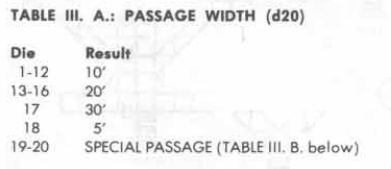
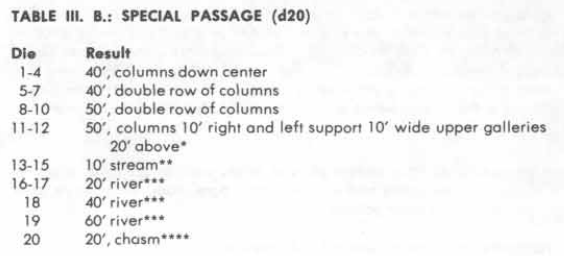
Appendix A does not address the height of the passages, but the mining section of the DMG p.106 gives a clue.
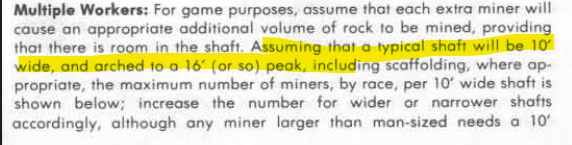
A ten-foot wide shaft will typically be arched to a height of 16 feet or so. Presumably, the wider passages may well be considerably higher at the peak of their ceilings.
Upshot here, it should be obvious that dragons at most ages will be able to comfortably traverse, provided they have folded their wings, a ten-foot wide passage. Even the wider ancient dragons, arguably, maybe able to squeeze through. They fly after all, they are light with flexible bones, like worms (wyrms) or snakes, they may well be able to compress themselves to smaller than normal widths. Not to mention that a few dragons may well have access to powerful polymorphing magics.
And, what dragons will be encountered. The Appendix C random dungeon monster tables show dragons on levels three and deeper. The lower one goes in the dungeon, the older the dragons met will be. It’s not until level 5 before one starts to run into adult dragons.
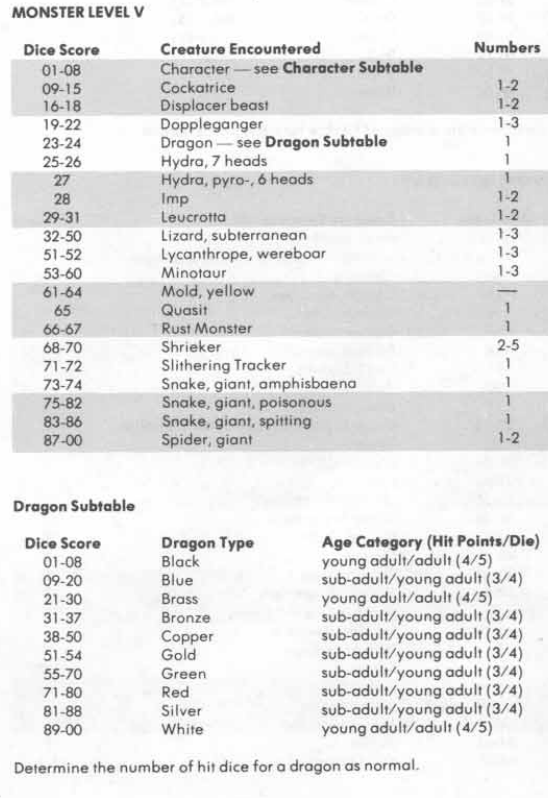
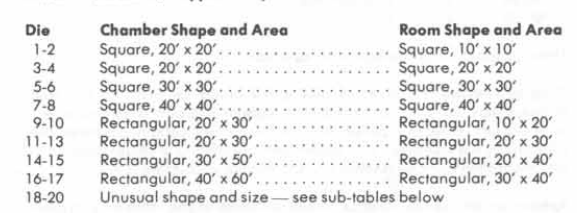
In any case, there you have it, in AD&D 1e, the dragons nearly always will be able to fit through a dungeon corridor. Yes, one will need to use common sense in determining whether any given dragon might fit in a room, but even then, if curled up like in Tolkien’s famous painting of Smaug, most dragons will usually fit into most rooms.
Yet again, we see that AD&D has a greater sense of realism and consistency than its critics give it credit. In fact, AD&D may well be more creditable than its critics.

 Fluid -- Druid
Leave a comment