
Yesterday, a friend asked me if he was doing something wrong running his game of AD&D. He said it was too deadly, characters keep dying. I couldn’t think of anything that was a problem. Nor, had it seemed to me like an inordinate amount of character deaths. But, this lead to a discussion of what works in AD&D, what effective player tactics are, and generally how things should work in a game. He said this might make a blog post, so here I am.
I’ve talked about what I think the real game in D&D is before.

Jeffro Johnson has spent a lot of ink on Appendix N, and How to Win at D&D, and the convergence/diffusion model of Braunstein. And, I have also riffed on Jeffro’s convergence/diffusion model with my Heat Engine Model of Role Playing Games. Those are the big picture stuff. What I’m discussing here is more nuts and bolts. Camshafts for that heat engine, how to work the transmission, and feather the brake while drifting a curve. In a way, it’s my version of How to Win or adjacent to it.
In AD&D basic human NPCs start with a tiny number of hit point, of about 2 or three hp. Mercenaries, trained professional soldiers, get 4-7 hp. A spear for 1d6 or 3.5 hp damage on average. A fighter, with no Constitution bonus, gets 5.5 hp on average. Most other classes start with fewer hp on average. So, on average, first level characters die if they take one or two hits. It’s expected that they die often. A character needs a few levels under their belt until they can feel reasonably safe to survive more than a few rounds of combat. But how to get those levels?
For me, seeking the big score is the big goal for a low level character. Avoiding combat if at all possible. But, just acknowledging that characters are kind of expendable until they find a magic item, or valuable gems and jewelry that give a big XP dump. There are reasons for this that I’ll get to in a minute, but hauling copper pieces back to town is not a winning strategy.
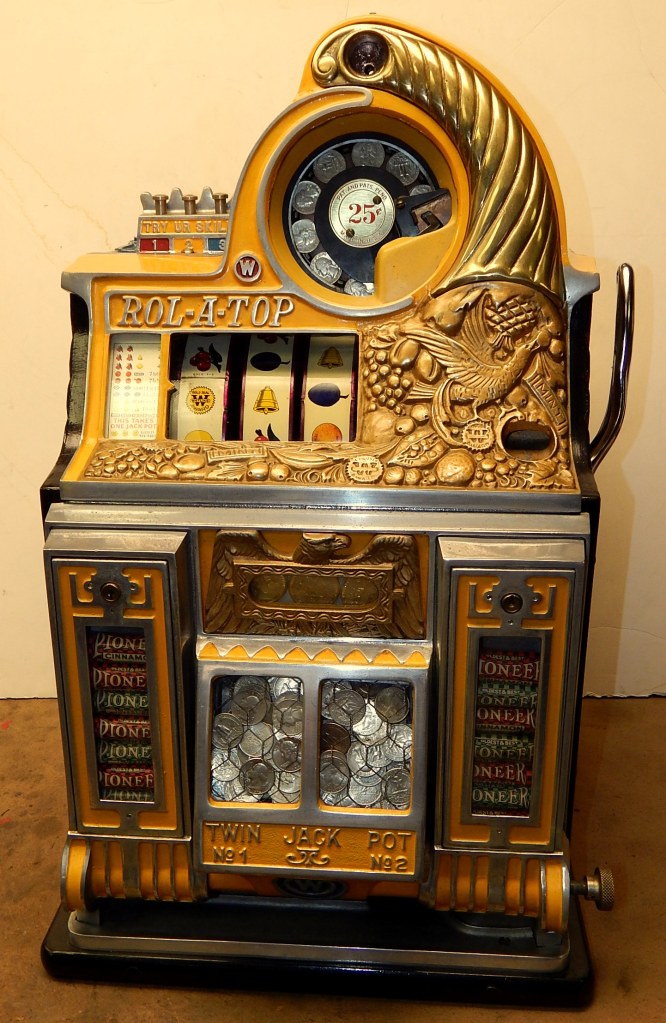
Now, many players much to referee consternation take the vulnerability of low level character to heart and play very cautiously. This is wrong-headed in my opinion. Low level player characters are free, I found a hundred of them at the park and took them home. Audacity and risk taking wins the day. Unless it doesn’t. But the treasure tables are a slot machine you throw characters into. Yes, a lot of the time, you’ll lose your quarter. But, sometimes, a thousand quarters spill out. You can’t win if you don’t play. And if you don’t play, you’ve already lost.
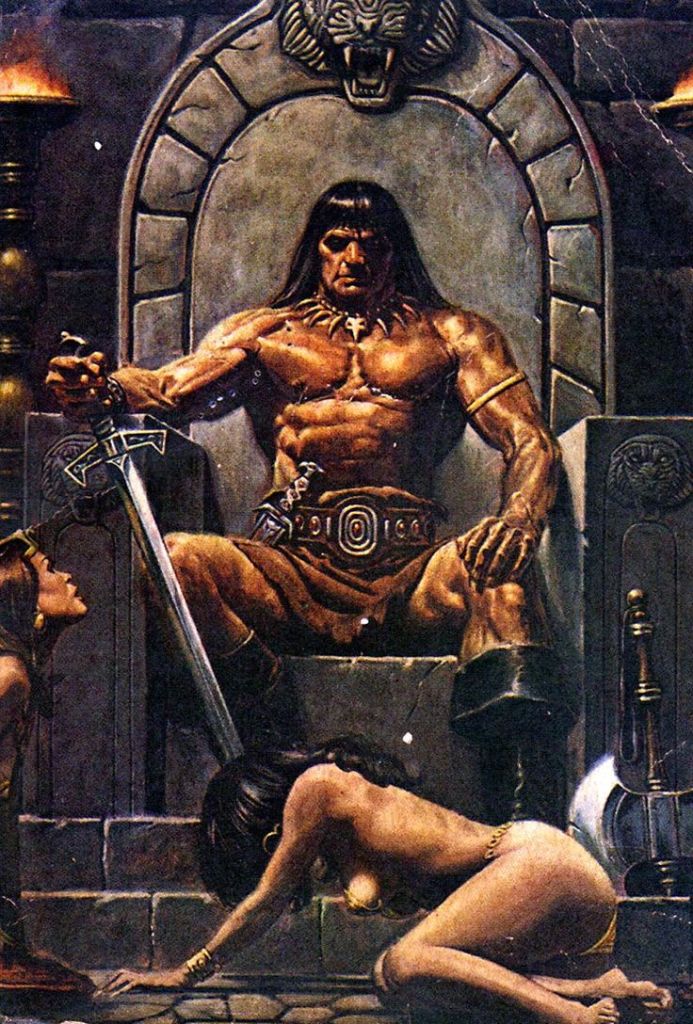
Jeffro, famously, said that one must look to Appendix N for inspiration of how to play. He was one-hundred percent correct. Because D&D was designed around stories of high adventure, high risk, and sometime high reward. The stories of Conan, the Gray Mouser, Elric, etc. are not the stories of plodders. It’s not about the grind. It’s about seeking extreme risk and winning in spite of the risk.
But people say, “It’s so deadly, my characters die. This is nothing like those stories of Swords and Sorcery.” No, no, no, fucking, no. Conan, to one degree or another, wins in all his stories, therefore players should always win? Absolutely not. The stories are stories because Conan happened to win, but he could have lost. If we know he can’t lose, that’s a crappy story. Conan takes wounds, is ensorcelled, falls off cliffs, gets crucified, betrayed, knocked unconscious, etc, etc. I’ve written on this before, at any number of points in his career, Conan could have died, he just happened to not do so. Oh, but that’s not realistic, one might say. Think of the odds.
Yes, let’s think of the odds. An AD&D character that reaches a decent level, has survived any number (likely a relatively huge) number of incidents that might have killed the character. There are pits, and cliffs, and poison, saves verus death, saves versus paralysation, saves versus this, and saves versus that. Every dice roll in AD&D is a form of saving throw, or alternatively, a living throw. Can I live after this? Roll. Yes. Can I live after that? No. Awww. It’s a remarkably low probability that any character reaches high level. Yet, it happens on a regular basis.
This is not so crazy as it seems. Our own lives are a series of improbable events. Will we get that job? Will we meet a person we love? Will we be hit by that car? Will we be struck by lightning. When I was in college, three friends took up the hobby of ice climbing. We were in Alaska, ice was available. They enjoyed it a lot. One day they didn’t come back. An avalanche came down the icy chute they were climbing. All three were killed, crushed under tons of snow. I didn’t take up ice climbing. I’m here now, they are not. But since that avalanche, I have had any number of near misses on the road, survived an emergency landing when hydraulics went out on an airliner, went to sea in storms, fallen off numerous objects, eaten a fair amount of suspicious looking food, and been packed into buses with clearly violent and insane fellow passengers. My friends failed their dice throws, and so-far I have not.
Risk taking is not an option, it is a requirement. Even the class of character doesn’t mitigate this. Character class may change the risks one chooses to take, but one must take risks all the same. But, of course, one must have a sense of the risk. Maybe you don’t need to know the exact odds, but a player should have an idea of the amount of risk being taken. Look at my unfortunate friends above. I had been raised in Alaska, I grew up watching avalanches rolling down the mountain. See this. My college friends were all from the Lower 48. They had not been raised around avalanches. They chose a risk that they did not have the experience to assess the odds and paid the price. It was fun while it lasted.
And, this is why rules as written (RAW) is important. Playing RAW results in a consistent game. And, a consistent game world. Just as with other games like Blackjack or Roulette, a player learns the rules and with enough play a player gets a sense of the odds. Once a player has that, they then can make skillful choices that can increase the odds of winning.
Rule Zero (the concept that any rule is subject to change by referee fiat) circumvents players from learning the rules and thus learning the odds. Some quite famous personages in role playing games, including some deeply involved in the development of D&D, vociferously hold onto the idea that the rules don’t matter, their fiat as DM (or referee) holds prominence over any rule. I totally disagree with this. I even disagree with Gary Gygax, who held that players should not know the rules, and should be punished if the DM sensed they had read the Dungeon Masters Guide. Note, though, that Gygax here did not go so far as others to say the rules didn’t matter, just that players shouldn’t know the rules. Presumably, Gygax still felt that his using and enforcing the rules was necessary.
Rule 0 and the idea of the DM (Dungeon Master) is an all-powerful being whose job it is to punish players is pernicious. A DM should no more seek to punish players than a croupier at the crap table should seek to punish players. That’s why I prefer the term referee over DM. Player’s have a right to know the rules of the game. Referee’s have the responsibility to know and follow the rules, as well as communicate the rules to players, and relative risks (to some degree). A game doesn’t conform to the players. The players conform to the game. That’s what a game is — a set of rules to which the players conform. How well they conform determines the quality of play.

Circumventing the rules (including things like fudging dice rolls) in order to punish players (or reward them) and feel powerful is, plainly, crappy behavior which changes a game into an exercise in manipulation. Which isn’t to say a referee can’t create unique dungeons and traps and such. But players should have a sense of what is unique and what is standard. If one plays AD&D consistently with Appendix A generated dungeons, players get a feel for what kind things they will encounter, what they might find, and the frequency of things like traps and such. To then go to Tomb of Horrors without any communication that they are now entering something different isn’t fair. Now, I am not saying this must be explicitly stated. But a referee should present clues or descriptive words that things are different.
For example, there was a common dungeon area we’d been playing for a while. Then one time we returned, and the referee informed us of various descriptive changes to areas we’d previously been that, oh-no, things were, for mysterious reasons, going, well, Lovecraftian. This descriptive effort gave us, the players, the clue to assess our risks differently. That made it fair. We now were in uncharted territory. And, we made different choices. Tomb of Horrors is so feared, not because it is so deadly (though it can be) but because nothing in it matches the familer odds of the rest of D&D. It circumvents player’s understanding of the world their characters inhabit, and the ability of the player to predict outcomes from his inputs.
A good game has a mix of both. It should have a mix of standard things, but 10-20 percent unique things. It’s like this in fiction too. The world should be predictable to readers, but not so much it gets boring. All unpredictable is chaos, it makes no sense and is not fun. All predictable is too much sense and also not fun.
But the slot machine. Oh boy. You have a coin, you know what lever to pull. You have sense of the odds (to some degree). And, bam, sometimes the loot spills out. And, AD&D is a slot machine. There are odds for random encounters, if there is a random encounter each monster has odds for having a lair nearby, in that lair are odds for what and how much treasure might be in that lair. The same can be said for any number of the subsytems in AD&D (dungeons, magic items, gems, jewelry). Players get a sense of it. So much so, that some referees complain of players “lair farming”. Yes, exactly, that’s what they are supposed to do. But that’s boring for me, says the referee. Well, fuck you, players don’t exist for your entertainment. Similarly, referees don’t exist for player entertainment. Both referee and players exist to play the game. Don’t like the game? Don’t play it. But, if you do play it, players don’t have the right to win, but they do have the right to play the game according to the rules and the odds created by those rules. Yes, working with the rules can become rote. But players deserve the chance, nonetheless, to work the rules. Entertainment is a byproduct of skillfull working of the rules by both players and referee.

And, when they do, you will start to see superior play that succeeds within the rules of the game. Then you will see those strings of unlikely odds piling up. Characters eventually will gain levels, which allows a referee to throw more of the game at the players and then there are new sets of odds to figure out for both the players and referees. It becomes more like Faro, than slots.
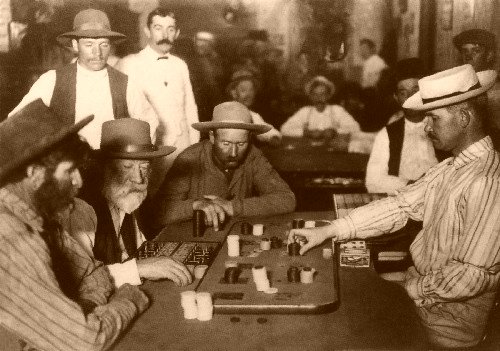
And, then in AD&D and a few other games (ahem, ACKS), eventually players build the domains of their characters and contend among one another. And, there the risks are less known, but also subject directly to the interaction between players, trust of each other, alliances between players, factions. It becomes a Braustein type game. And, that’s Poker. The hands are hidden, there are a lot of bluffs, but even then the winning hands are known.

But Braunstein games fail when the world is too general, unpredictable, and players can’t judge what might lead to success, or even what success might look like. Braunsteins can often seem like a bunch of people arguing or just randomly backstabbing one another. Braunsteins work best when set in a predictable world, that works with known and consistent rules. Because how can one take the risk with that other player when the other risks of the world aren’t well understood?
RAW gives players a consistent world within which they can make audacious choices, take risks, and should they survive, reap the rewards of success.

 Fluid -- Druid
Leave a comment