
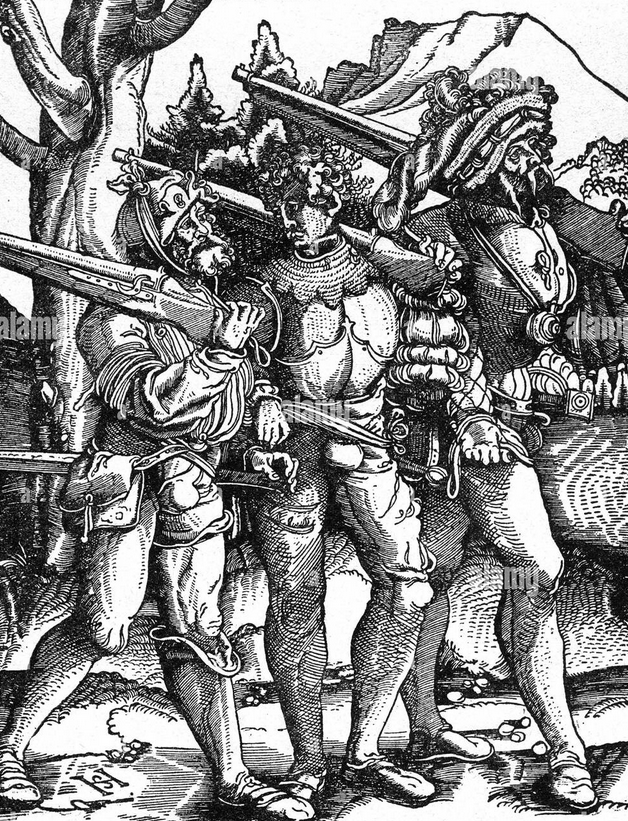
I recently discussed the introduction of firearms into AD&D 1e. In that article I presented a discussion of the use of Boot Hill rules and associated 19th century firearms. Then, I finished that article with a presentation of renaissance era firearms for AD&D. But, not all information to actually fully implement such firearms in AD&D was presented. These include things like costs to purchase and operate such firearms. And, in addition some of the limitations of the different types of renaissance firearms and environmental factors that influence their use. This article rectifies this.
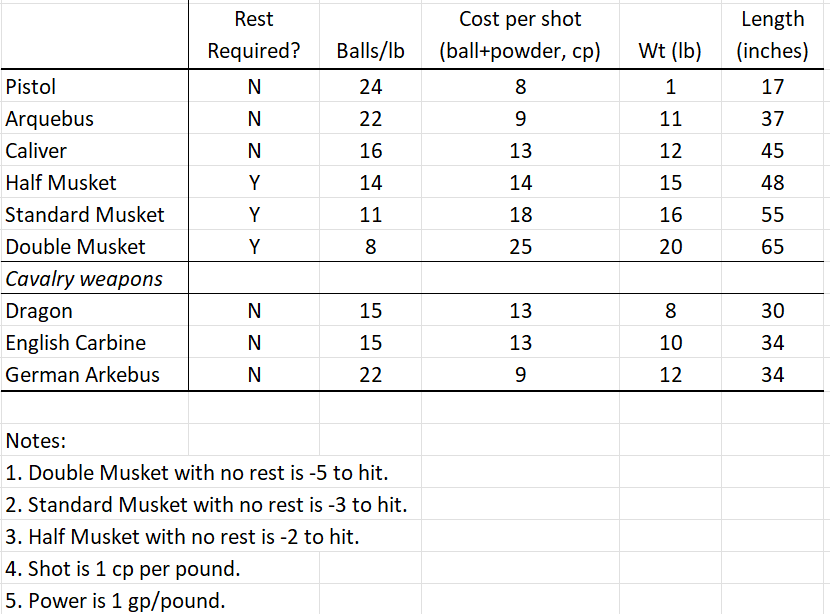
For the larger and heavier weapons, the use of rests are required for proper aiming. The table shows which weapons require a rest and the notes show the modifiers to hit should a rest not be used. The table also gives the weights of the weapons for use in calculating encumbrance. Plus the cost per shot (ball + powder). Note that the common military practice of the day was to issue equal amounts of shot and powder. That is, one pound of powder per one pound of shot. Soldiers often wore sashes with a dozen measured charges of powder (referred to as the twelve apostles).
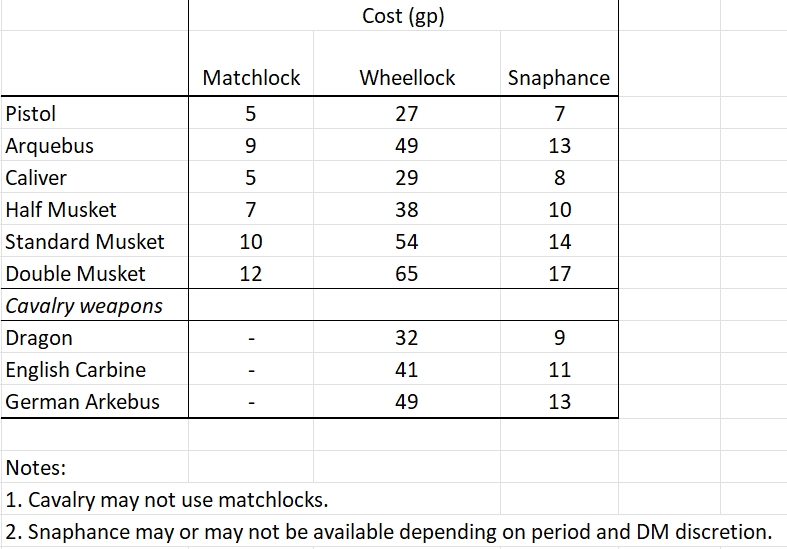
Depending on the era (and various military budgets and preferences) firearms might be outfitted with different methods of fire of varying levels of reliability and sophistication.
Matchlock — these firearms used a cord of burning match (slow match) as the means to ignite the powder. Matchlocks are the cheapest but least reliable of the bunch. And, inconvenient as one needs to carry a constantly burning bit of match.
Wheellocks — these used a complicated spinning mechanism to create sparks to ignite the powder. Wheellocks are the most expensive type with the benefit of increased reliability. Wheellocks were favored by cavalry.
Snaphance — these are of the middle ground of price and of improved reliability due to sliding covers to protect the priming pan from moisture and simpler mechanism than the wheellock. However, they are a later development that would be further refined into the flintlock of the 18th & 19th century. At the DM’s discretion snaphances may or may not always be available.
Misfires
All of these weapons bear a significant chance of misfire. Prior to rolling to hit, the player must roll for misfire based on the environmental conditions. Note that most dungeons (with usual DM discretion of course) would be considered damp conditions.
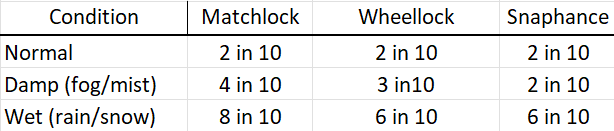
Note that after firing a dozen shots (the full twelve apostles), the firearm must be allowed to cool for one round and be cleaned. In not cleaned, then the chance of misfire increases by one for each round over twelve the gun is fired.
Firing Rate
Note that I have revised the rate of fire for each of the firearm types shown in the earlier article. This was done for a number of reasons, the first being the various sources at my disposal give varying information and I revised based on the preponderance of the evidence. However, part of the issue with the discrepancy may well be the firearms in common use or when troops are well-drilled. As such, the firing rates now shown are for 0-level men. However, if such men are led by proper level officers (fighters) then the shown rates may be doubled. Additionally, Player Characters of fighter class also may double the firing rates for themselves (and led troops).
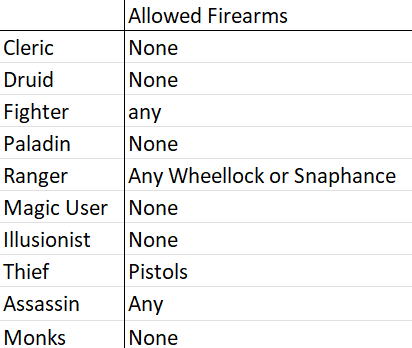
If there is confusion as to which classes may use firearms, consult the table below.
This should add the information needed to use renaissance firearms in your AD&D campaign.

 Fluid -- Druid
Leave a comment